
[ad_1]
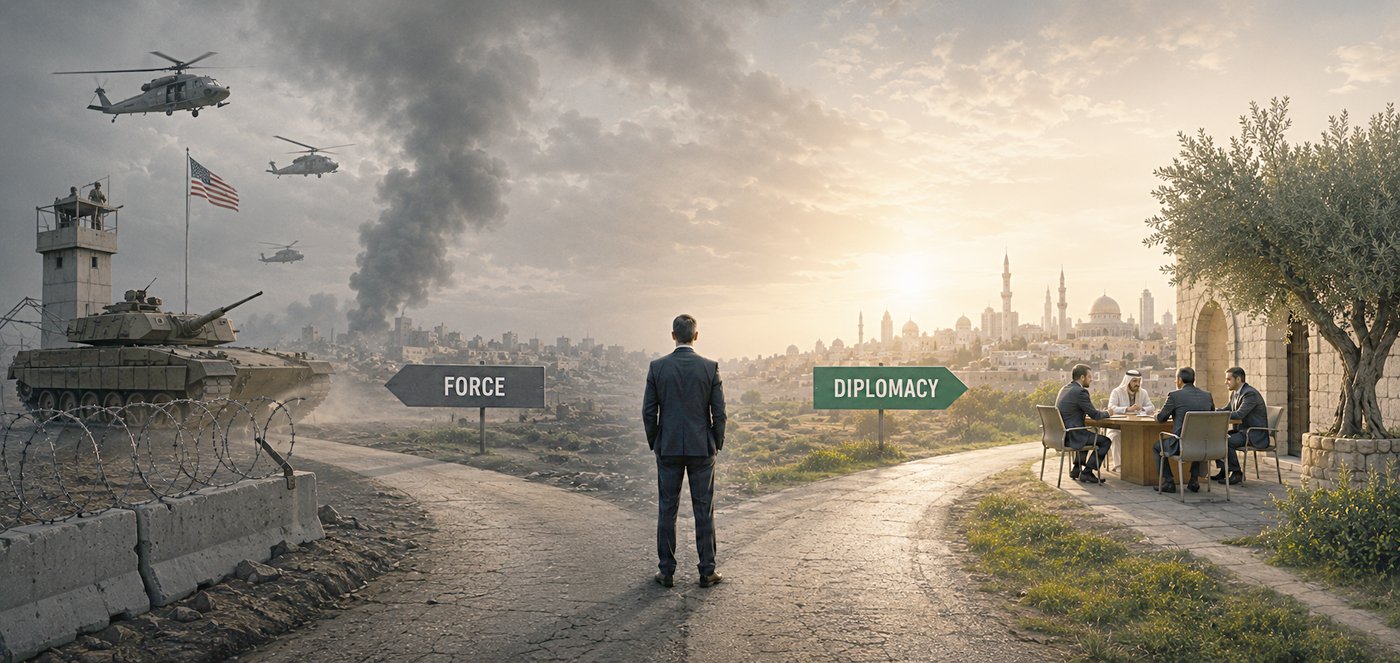
For more than twenty years now, American leaders from both parties have talked about turning over a new leaf in the Middle East. One president pushed hard for democracy promotion, another tried diplomatic outreach, and someone else swore we’d finally end the “forever wars.” Yet every time a crisis hits, Washington’s first move is rarely sitting down to hammer out a political deal. Instead, it reaches for sanctions, sends in more troops, ramps up deterrence, and leans on the threat – or actual use – of force.
This pattern raises a tough question. If the wars in Afghanistan and Iraq didn’t create stable governments, if years of pressure haven’t really changed Iran’s behavior, and if coercion keeps delivering only mixed results, why does the U.S. keep relying on the same old toolbox?
It’s not just about individual presidents or partisan fights. Republicans and Democrats argue over tactics, sure, but they all work inside a national security system that has slowly pushed military and coercive tools to the top while sidelining diplomacy and messy political solutions. The foreign policy crowd increasingly views the Middle East first through the lens of security competition and only second through its complicated politics.
More than sixty years ago, President Dwight Eisenhower warned about this in his farewell address. He talked about the “military-industrial complex” – the tight web of defense officials, contractors, and politicians that could end up warping America’s priorities. He wasn’t saying military power is useless. He worried it might become so dominant that other options would lose out. You can still read the speech on the Eisenhower Presidential Library archives. At the time it felt like a distant concern. Today it looks spot on.
The 9/11 attacks supercharged this shift. The Global War on Terror didn’t just launch invasions – it changed how Washington saw the world. Instability anywhere became a direct security threat. Local disputes turned into big strategic battles. Grievances rooted in history and society got reframed as problems that needed sanctions, surveillance, or military action. Diplomacy didn’t vanish, but it became secondary, always operating inside a security-first framework.
The Middle East shows this dynamic better than anywhere else. Take Afghanistan. At first, the invasion looked like a clear success. The Taliban fell fast, and officials in Washington talked confidently about building democracy and long-term stability. But turning military victory into a legitimate government proved far harder. We had the guns and the money, but we underestimated tribal loyalties, history, and what local people would actually accept. After twenty years, the U.S. left and the Taliban came right back. The Special Inspector General for Afghanistan Reconstruction (SIGAR) reports laid it out plainly: unrealistic goals set in Washington, poor understanding of local realities, and timelines that ignored conditions on the ground.
Iraq told a similar story. Toppling Saddam was militarily straightforward. What came after – disbanding the army and state institutions, the sectarian explosion, and eventually the rise of ISIS – was a political disaster. These failures should have forced a deep rethink. Instead, they often led to calls for even tougher pressure and better deterrence. Setbacks didn’t kill faith in coercive tools; sometimes they strengthened it.
With Iran, we’ve seen the same cycle across administrations: periods of talks mixed with heavy sanctions, military posturing, and threats. The 2015 nuclear deal showed diplomacy could work when both sides saw real incentives. But it fell apart partly because the wider U.S. approach stayed locked in security logic. We keep repeating the pattern – negotiate, pressure, escalate, repeat.
Yemen has been another messy example. Support for military campaigns, partial pullbacks, and occasional pushes for talks – all while security concerns consistently trumped real political efforts to fix the roots of the war. The human suffering that followed showed the limits of treating it mainly as a military problem.
The Palestinian issue might be the starkest case. For decades, the U.S. talked about a two-state solution but often acted as if broader regional deals could sideline the core conflict. The Abraham Accords under Trump were a real diplomatic win for normalizing ties between Israel and several Arab states. Yet they rested on the idea that the Palestinian question could be managed or postponed. October 7, 2023, and everything since made clear that deep grievances don’t disappear just because you focus elsewhere.
There’s also the selective approach to democracy. When Hamas won elections in 2006, Washington rejected the result and helped isolate them. That sent a message across the region: democracy is fine – unless it produces the “wrong” winners. Hamas could have taken a different road toward normalization and tolerance if U.S. could act otherwise.
All this points to a structural issue inside the U.S. system. It’s not that American officials are clueless about the Middle East or incapable of diplomacy. The institutions – military, intelligence, defense contractors, and national security bureaucracies – simply carry more weight. They shape how problems get defined and which fixes feel realistic. Coercive options often have built-in advantages over patient political or diplomatic ones. So diplomacy ends up as just another tool within a pressure strategy rather than a genuine alternative.
The Middle East keeps exposing the limits. This is a region shaped by history, identity, religion, legitimacy, memory, and fierce resistance to outside meddling. You can’t sanction or bomb those things into submission.
The big lesson from the last twenty-five years isn’t that America lacks power. It has more military muscle than almost any country in history. The real lesson is that raw power can’t solve problems that are fundamentally political. We’ve won battles, removed regimes, and shown overwhelming strength – but turning those wins into lasting, stable political outcomes has been incredibly difficult.
Until Washington rebalances security thinking with real diplomatic and political understanding – and stops treating military force as the default starting point – the same cycle will continue. The U.S. will always be able to project power in the Middle East. The harder, more important question is whether it can learn to wield influence without making force the first option every single time. That may matter more than any single conflict for the future of American policy in the region.
Greg Pence is an international studies graduate of University of San Francisco and my articles have been published on websites like Middle East Monitor.
Join the Discussion!
We welcome thoughtful and respectful comments. Hateful language, illegal content, or attacks against Antiwar.com will be removed.
For more details, please see our Comment Policy.
[ad_2]
Source link
