
[ad_1]

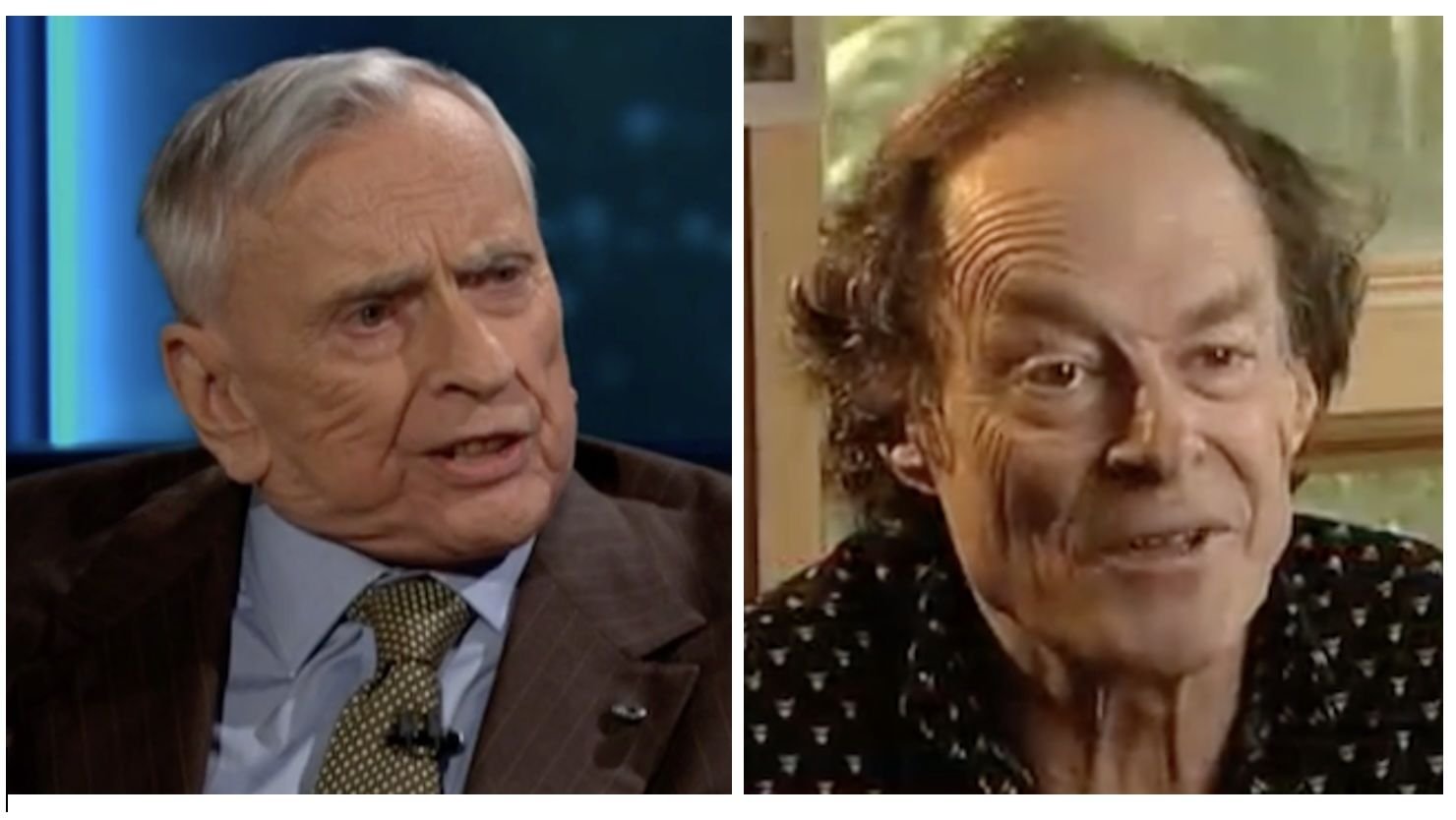
In July, 2012, my two favorite public intellectuals, Alexander Cockburn and Gore Vidal, died within 10 days of each other. Despite their origins on different continents – Cockburn hailed from Ireland, while Vidal was born in the United States – they nevertheless shared certain common features aside from their Anglo-Irish ancestry: formidable erudition, superb writing, acerbic wit and a wonderful sense of humor. These last two qualities in particular were what made them a joy to read, to see on television or hear on the radio and to encounter in person.
I should begin by describing what I mean by a public intellectual. A public intellectual is someone who, by a combination of a powerful and original mind, TV and radio appearances (these days, online media in their various forms may be involved) and writings that are widely accessible to a general audience – this includes writing in a language that an average reader can readily understand – presents her, his or their opinions, insights and criticism of our contemporary world. While there are notable exceptions (the historians Eric Foner, Heather Cox Richardson and Alan Taylor and theologian Cornel West come immediately to mind), this definition generally excludes those whom Vidal, in an uncharitable mood, called “the hacks of academe.” The main reason these “scholar squirrels,” as another Vidal metaphor implies, don’t make the cut is that the knowledge they accumulate tends to get stored away somewhere in the ivory towers of universities where it is largely inaccessible to the rest of us. It is then shared among the specialists in a given discipline by way of what another public intellectual, Edward Said – albeit of a somewhat more borderline variety (full disclosure: I never made it all the way through Orientalism) – called “rebarbative jargon” (it means “repellant” or “irritating”).
Cockburn and Vidal also arrived at their positions – political, literary and cultural – by markedly different paths. Alexander Cockburn was the eldest of three sons of Claud Cockburn, a brilliant radical journalist, erstwhile member of the Communist Party and uncredited screenwriter of the cult movie starring Humphrey Bogart that John Huston made of Cockburn’s novel, Beat the Devil, and Patricia Byron, a brilliant writer, editor and trainer of horses, among other accomplishments. Tellingly, both of Alexander’s younger brothers, Patrick and Andrew, also became world-renown journalists, Patrick having recently written a biography of their father, Believe Nothing Until It Is Officially Denied: Claud Cockburn and the Invention of Guerilla Journalism.
The most significant figure in Gore Vidal’s life, by contrast, was his grandfather, Thomas Pryor Gore, the first U.S. Senator from the State of Oklahoma. He was blinded in two separate accidents as a child and relied on the young Vidal to read to him from his voluminous library. Vidal also inherited from his grandfather his populism – as in the Populist Party of the 1890s, discussed in Lawrence Goodwyn’s Democratic Promise: The Populist Moment in America– and his pacifism – Pryor Gore had experienced first-hand the aftermath of the devastation of the U.S. Civil War as a boy growing up in Mississippi. As Vidal often pointed out, his grandfather was one of only a handful of U.S. Senators to vote against U.S. entry into World War I.
The origins of their more intangible qualities of wit and humor can be partially traced, however, to the same literary antecedent. Both considered P.G. Wodehouse to be the greatest comic writer in the English language. The author of such memorable characters as the “mentally negligible” Bertie Wooster and his butler Jeeves, the equally mentally negligible proprietor of Blandings Castle, Lord Emsworth and the raconteur habitué of the Anglers Rest pub, Mr. Mulliner, among many others, Wodehouse was not only an ingenious devisor of plots with an instinctive knowledge of the sources of human motivation, but a writer whose adroit use of language approached that of the slightly less comically inclined Gustave Flaubert.
Other sources might be adduced. Cockburn mentioned on more than one occasion that when he was young and feeling depressed, his father Claud would recommend that he read some Chuck Marx to cheer himself up. While Karl was not in same league as his namesakes Groucho, Chico and Harpo, he was also no slouch in the comedy department, unlike his legions of exegete agelasts (this last term is from the French standup comedian, François Rabelais). Marx could hurl choice epithets at the objects of his derision with the best of them, Cockburn and Vidal included, and in his famous tract 18th Brumaire of Louis Bonaparte, he memorably likened the tragedy set off by the coup d’état of Napoleon I with the farce initiated by that of his nephew, Napoleon III. How he would have characterized today’s Reality TV Show, where members of the audience are daily killed en masse is anybody’s guess.
Vidal’s sensibility was deeply impacted by movies, manifested not only in his professed love of figures like W.C. Fields and the Zucker Brothers of The Naked Gun franchise, but in his own career as a TV writer for 1950s live television and as the MGM screenwriter who slipped in a same-sex subtext to a remake of Ben-Hur (1959) under the nose of an oblivious Charlton Heston. Vidal’s talent as an accomplished mimic of the voices of public figures like Jack Kennedy, Richard Nixon and Eleanor Roosevelt perhaps also owes something to his childhood infatuation with the products of the studio system of Hollywood’s Golden Age.
+++
When I was a graduate film student at the University of Iowa in the early 1990s, a colleague and later co-conspirator in our unionization campaign of our fellow graduate workers gave me a complimentary subscription to The Nation. During this period, both Cockburn and Vidal were standout contributors, Cockburn in his regular Beat the Devil column and Vidal in his occasional essays and opinion pieces. When I arrived in San Francisco in 1995 after abandoning an academic career, I was newly presented with the opportunity to see each of these men in person during their not infrequent forays into the Bay Area.
An announcement – perhaps in the San Francisco Bay Guardian, one of the local newspapers (newspapers were actually printed on paper back then) that I routinely consulted to orient myself to life in my new city, or else over the airwaves of KPFA radio – alerted me that Cockburn was slated to appear in Berkeley to give a talk. I climbed into the Dodge Dart that had transported me from Iowa, crossed the Bay Bridge and arrived to find that Cockburn was a no-show. Instead, someone named Bruce Anderson, who edited a weekly newspaper published in Mendocino County called the Anderson Valley Advertiser, sat in his place.
“Cockburn couldn’t make it, so he asked me come,” he informed us.
I was disappointed, but soon I was also an AVA subscriber. Then, one day in 1999, I became a contributor to its nonpareil Letters to the Editor page when Bruce Anderson published my lengthy polemic on the battles then being waged at the Pacifica radio network and its flagship station, KPFA, under his inspired title, “Pacifica’s Audio Thuggery.”
I subsequently saw Cockburn for the first time in person not long after my encounter with Anderson at the now defunct Modern Times book store on Valencia Street in San Francisco’s Mission District, where he appeared as part of his tour promoting his then-newly published collection of essays and diary entries, The Golden Age is In Us. I also saw the Editor on a number of occasions, usually at the AVA table at the Anarchist Book Fair at the County Fair Building in Golden Gate Park and once in a memorable tag-team appearance with Cockburn at the San Francisco Public Library’s Park Branch on Page St. in the Haight-Ashbury during the period when Julia Butterfly Hill was residing stylite-like in a Redwood tree somewhere north of the City.
Cockburn was running late, but Anderson assured the audience, “Cockburn drives like a maniac,” and would therefore be arriving soon. When he did, Cockburn suggested that the alliance of labor unions and environmentalists then being touted in publications on the Left be commemorated by commissioning a painting in the style of the 18th Century French Neoclassicists, an Adoration of the Magi-type genre piece depicting members of the United Steelworkers of America reverently lifting Joan Baez skyward to pay respects to the beatific Hill in her Redwood aerie. On another occasion after George W. Bush’s invasion and occupation of Iraq, during a talk at the above-mentioned book fair, Cockburn dismissed comparisons then being made between Bush and Hitler. “That’s like comparing Pee Wee Herman to the Marquis de Sade,” he said.
Gore Vidal would also on occasion find his way into the Bay Area. Before Christopher Hitchens committed political seppuku, I watched him interview Vidal on stage at the Berkeley Community Theater. In April, 2002, at the time of the publication of his book-length essays, Dreaming War: Blood for Oil and the Cheney-Bush Junta and Perpetual War for Perpetual Peace: How We Got to Be So Hated, I saw Vidal with a packed house in the auditorium of the San Francisco War Memorial say of George W. Bush and his famous Axis of Evil, “You realize he doesn’t even know what an ‘axis’ is.”
But my most memorable personal encounter with Gore Vidal was my first. It took place in February, 1996 at San Francisco’s Masonic Auditorium. Vidal was interviewed on stage by Wendy Lesser of The Threepenny Review and afterward took questions from the audience. When he was asked his opinion of Oliver Stone’s film JFK, the aftereffects of which were still then rippling through the culture, Vidal sighed and said, “We live in a country where ninety-nine percent of the people have never read a book. Then there is the one percent who have read one book. Oliver Stone is one of those people who have read one book. Unfortunately, it was the one by that crazy district attorney in New Orleans”
Today, when the wit and humor of public intellectuals like Cockburn and Vidal have largely been eclipsed by a pandemic of humorless moralism, here’s to a country where more people read more books and more people write them in the spirit of these two Masters of the Art.
[ad_2]
Source link
