
[ad_1]
Photograph by Port Workers for Palestine
As Israel’s genocidal campaign grinds on — with over 70,000 Palestinians slaughtered in Gaza and its aggression now spreading into Lebanon — a powerful new front of resistance is emerging at the world’s ports. Dockworkers, truckers, and solidarity activists are refusing to be complicit in the machinery of death, physically blocking weapons shipments and exposing the global supply chains that fuel endless war and profit from mass slaughter.
These actions are not symbolic gestures. They are a developing strategy to choke the war machine and dismantle the genocide economy at its weakest links. But to succeed, they must evolve into a sustained, coordinated international effort. Isolated blockades can raise awareness; only synchronized, cross-border action can truly starve the beast.
Italy’s Ports of Resistance
Italian dockworkers have been at the forefront. Unions like the Unione Sindacale di Base (USB) and the Autonomous Collective of Port Workers of Genoa (CALP) have repeatedly shut down operations to prevent arms and military components from reaching Israel.
In September 2025, dockworkers in Genoa and Livorno blocked ports during a nationwide general strike that brought millions into the streets. In Ravenna, workers refused entry to trucks carrying explosives bound for Haifa. Similar actions have targeted vessels linked to ZIM and other carriers.
The resistance has spread south as well. In Calabria, at the strategic port of Gioia Tauro, activists and port workers have mobilized against suspected dual-use shipments and military cargo destined for Israel.
Greece Joins the Fight
The momentum is spreading across the Mediterranean. In Greece, dockworkers at the major port of Piraeus have taken bold action, blocking shipments of military-grade steel and ammunition bound for Israel. Hundreds of workers and activists have mobilized to halt loading and unloading of deadly cargo, declaring they will not be complicit in the ongoing genocide.
New Jersey and the American Front
Across the Atlantic, the Port of Elizabeth in New Jersey has become a critical battleground. As the third-largest port in the United States and the single most important commercial exporter of weaponry to Israel outside of military bases, it ships approximately 1,000 tons of weapons and military components per week.
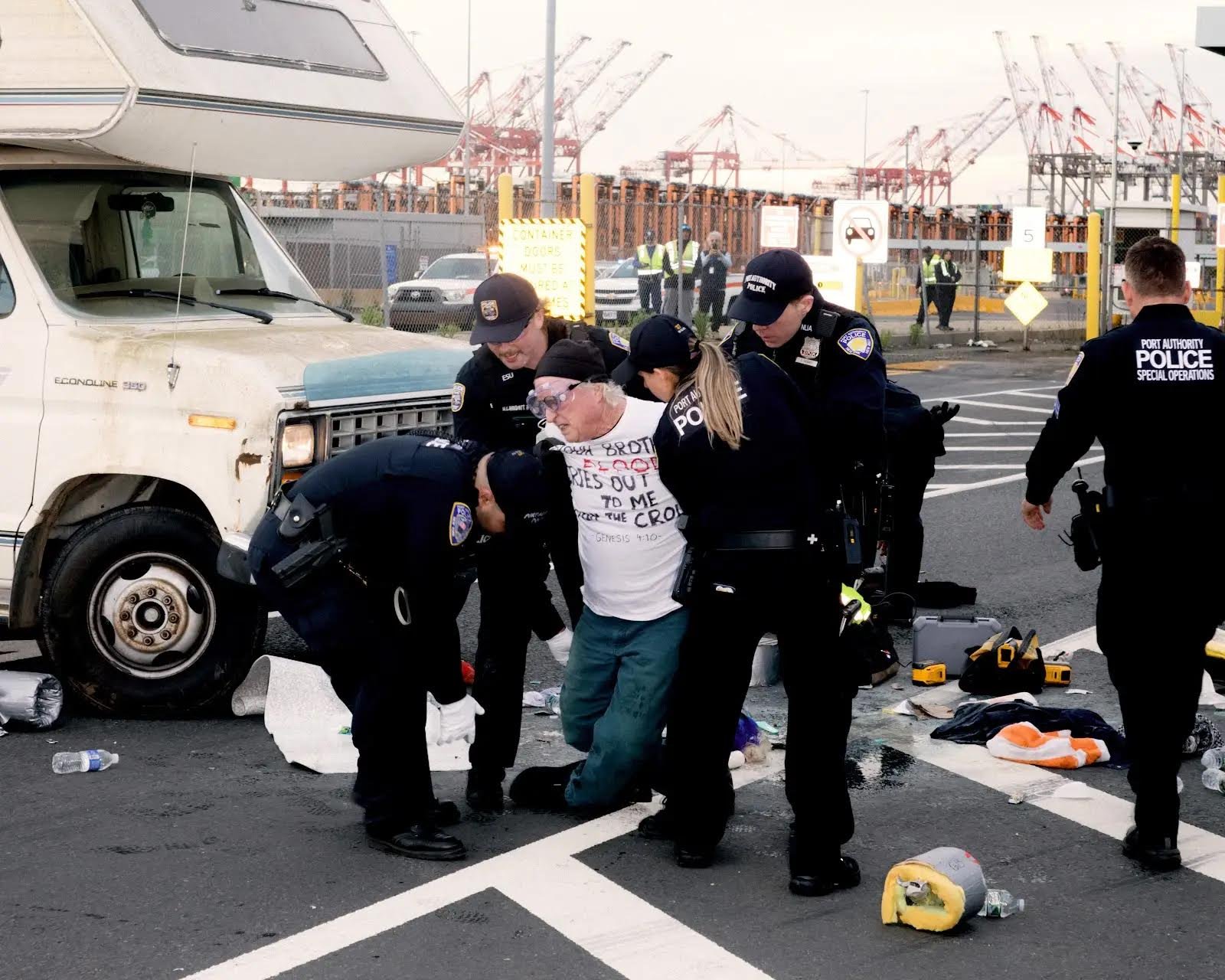
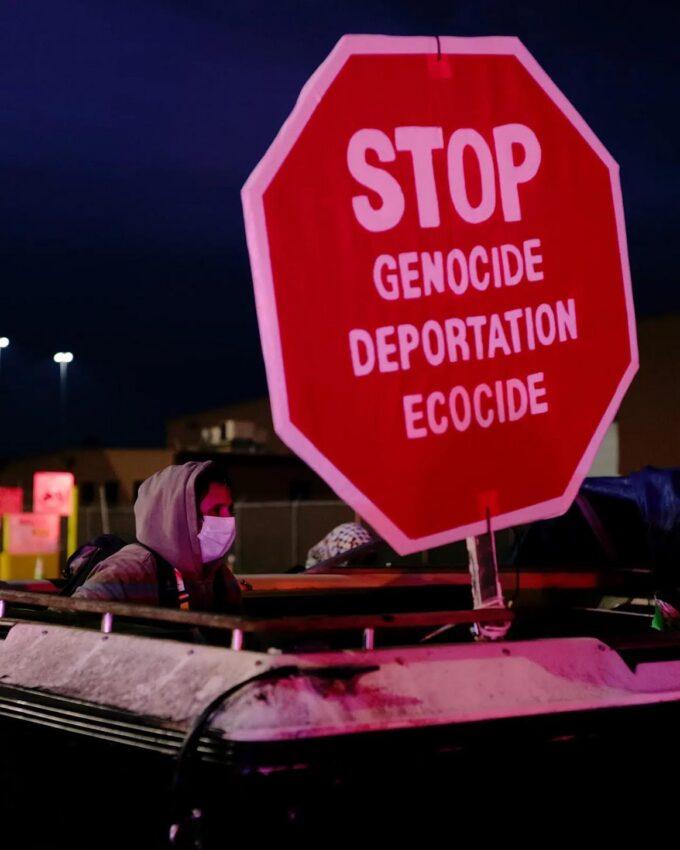
On May 22, 2026, over 30 activists blockaded the Maher Terminals at 4:30 a.m., targeting the ZIM Virginia and Maersk vessels carrying ammunition bound for Israel. Demonstrators chained themselves to an RV and a truck with a boat, obstructing the terminal entrance with banners reading “ZIM and Maersk Ship Genocide and Ecocide,” “Block the Bombs,” and “Stop Genocide, Ecocide & Deportation.” Ten activists were arrested and now face felony charges.
Danny Creamer, one of those arrested, stated: “Weapons companies like Zim and Maersk cannot be allowed to perpetuate and profit from the violence and genocide committed by the United States and its allies. I believe every single person has the responsibility to resist the actions of our government and these corporations, regardless of consequence.”
Mark Colville added: “We blockaded the terminal to stop the US government from violating its own laws by sending weapons to Israel to commit war crimes and genocide.”
Port Workers for Palestine has conducted persistent outreach at Elizabeth, highlighting the port’s role as a key artery in the U.S.-Israel war machine. While the International Longshoremen’s Association (ILA) has been largely unresponsive, non-unionized truckers have shown far greater sympathy. Because official union channels have failed to act, grassroots activists have stepped in.
Photograph by Port Workers for Palestine
Toward a Coordinated International Effort
These blockades are part of a growing global awakening. A recent international meeting of port workers in Turkey brought together representatives from at least 34 unions across 34 ports. The gathering laid the groundwork for coordinated actions planned for this fall — late September into October — aimed at escalating pressure on the war economy through synchronized strikes and blockades.
From Gioia Tauro to Piraeus, from Genoa to Elizabeth, the message is clear: ports must become barriers to war, not corridors for weapons deliveries. International solidarity is not optional — it is essential. Isolated actions raise consciousness, but only a coordinated, cross-border campaign can deliver decisive blows against the genocide economy.
The vision runs deeper than Palestine alone. Ports represent communal ownership and collective leverage. The military-industrial complex extracts enormous resources from working communities before they ever see the benefits of their labor. On average, every American contributes over $5,000 per year to U.S. militarism — a figure that has only grown under Trump. As working people, we have a profound moral obligation to stand up not only for ourselves but for the international community: to refuse the flow of weaponry that brings such misery to Palestine, Lebanon, and beyond.
Governments and corporations denounce these efforts as “disruptive.” But the real disruption is the daily shipment of bombs that level hospitals, schools, and entire families. Workers and citizens refusing complicity are exercising the highest form of solidarity: using their labor power and collective presence to stop the killing.
The path forward is urgent. Port workers, unions, truckers, and solidarity movements must expand these actions — coordinating across borders, targeting key chokepoints like Elizabeth, Gioia Tauro, and Piraeus, and building sustained pressure until arms flows cease. The fall coordinated actions emerging from the Turkey meeting represent a critical step in this direction.
History will remember those who blocked the ships, not those who loaded them. From Genoa to Newark-Elizabeth to Calabria, Piraeus, and beyond, the message is resounding: Not one more weapon, not one more shipment.
The ports are rising. The resistance is international. The war machine and the genocide economy can — and must — be brought to a halt.
[ad_2]
Source link
