
[ad_1]
We live in a fabulous world: amazing hidden civilizations, exotic unknown animals, and even bizarre human giants abound—at least, on our televisions.
TV program schedules continually promote the ubiquitous daily presentation of such exotica on series after series, always with disparagement of the foolish mainstream scientists who fail to become True Believers in the paranormal exotica du jour.
And yet, let’s face it: none of the giants or fabulous beasts even exist, and the amazing hidden civilizations never turn out to be as advertised. So why have so many modern people turned from relatively rational scientific perspectives on the world to views that might have been held by medieval believers in the griffins who guard the gold of Asia?
The long-suffering and much-disparaged mainstream scientists often simply ignore these issues, but given the extraordinary prevalence of weird beliefs widespread in what is putatively the modern world, it’s a good idea to examine these beliefs, preferably from a modern rather than medieval perspective. We can apply the principles of scientific psychology to these issues. And because exotic weirdness was perhaps more acceptable to the mainstream in premodern, less scientific times, we might benefit from taking a modern psychological look at such exotica in cases of the past.
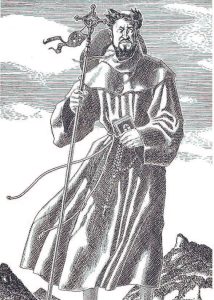
of Fray Marcos de Niza
This brings us to the case of the greatly maligned cleric Fray Marcos de Niza, frequently called “The Lying Monk” by mainstream historians (and practically everybody else).
Marcos was a Franciscan living in what is now Mexico. Hernan Cortez’s conquistadores had recently stolen an amazing amount of gold from the Mexica people, the Aztecs, and had then accidentally dumped most of it into the great lake that used to surround Mexico City. This was a disappointment to the conquistadors, to say the least. They frantically began searching for replacement gold in every direction, and their Viceroy sent poor Fray Marcos de Niza on what was basically a treasure hunt into the deserts of what are now Arizona and New Mexico.
Marcos was accompanied by several native people and by Esteban, a North African who had earlier traveled with Alvar Nunez Cabeza de Vaca on his journey to Mexico from coastal Texas. Esteban, as a veteran of the Cabeza de Vaca odyssey, scouted ahead of the main body of Marcos’s expedition, sending back messages by means of a prearranged code based on the size of Christian crosses. As a result, we’re not entirely clear how much of Marcos’s account derived from his own observations, from unknown sources via Esteban, or from Esteban himself. But his account, at least according to many scholarly books on the subject, could be taken as evidence that the poor maligned cleric ranged somewhere on a continuum between a person who compulsively lies and a person with delusional psychosis.
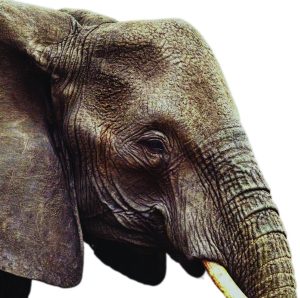 He supposedly claimed that he “saw” that the Pacific coastline veers to the West (near the point at which it actually does) when there is no conceivable way he could have traveled there, given the time limits of his journey. He supposedly claimed to have seen elephants and camels and some weird beast with a single mighty tooth (so long that the animal had to lie down to graze) at the amazing hidden civilization of Cibola, the goal of his expedition. He supposedly reported that there was much gold, that the buildings of Cibolan cities were encrusted with emeralds, and that the whole of Cibola was “greater” than the Mexico City of his day.
So said Marcos—apparently. But consider: Does it make any sense that he would have said these things?
 The legendary “cities of Cibola” were in fact small villages near Zuni in modern New Mexico. The inhabitants owned virtually no gold and had no emeralds, and there wasn’t an elephant, camel, or bizarre single-toothed monster in sight. What they did have, in the area surrounding today’s Hawikuh Ruin, was a little corn, some turquoise used for personal and home decoration, and some flat dirt for the corn to grow in.
Now, Marcos knew all this. He knew Hawikuh as it was: all that flat dirt. Would he really have told these amazing stories of wealth and grandeur and then gone back to the place in the company of several hundred greedy and energetic conquistadors, all with lethal combat skills, after promising them streets paved with gold and piles of emeralds when all he’d actually have to offer these truly dangerous men were some little green rocks and a few bits of very dry corn?
Did Marcos really report any of this? Was he attempting suicide by conquistador? If not, what was really going on?
Well, Marcos did say that he “saw” how the coastline went; on the other hand, I personally have “seen” that psychological principles can apply to historical questions, and I didn’t have to go anywhere to see it. As Socrates pointed out so long ago in the Euthydemus, language has ambiguities: you can “see” a thing in one sense, cognitively, without “seeing” it perceptually.
It may be the same with Cibola’s being “greater” than Mexico City. The Cibolan villages had no architecture even remotely comparable with the palatial buildings of the great capital, but as W.K. Hartmann (2014) pointed out, the area controlled by those villages may have been “greater” in size than the area of Mexico City at that time.
Language again.
Gold? Marcos did not report any (although he did mention one rumor of gold), but Marcos’s barber apparently reported it in great quantities after a conversation with Marcos that may or may not really have occurred during a shave.
Emeralds? There were turquoises embedded around the doorways of Hawikuh, just as Marcos said, but the science of geology hadn’t been invented yet. There seems to have been some confusion in reports of the time of “emeralds” and “jade” with the turquoises that actually existed in Cibola. There were little green rocks in the walls, just as Marcos said, but were they emeralds, jade, or turquoise? Well, at least they were green.
Let’s turn from the amazing hidden civilization of Cibola to the exotic unknown animals, so reminiscent in their cryptic qualities of Bigfoot, Nessie, and their colleagues today. What about Marcos’s elephants, camels, and the thing with the single gigantic tooth? Many books on the subject accuse Marcos of having produced this weird zoo, but in fact the bizarre animals don’t actually show up in his Relación of the journey. He never saw them—nor claimed to have done so.
The beasts turn up in a letter of 1539 from Spanish comptroller Rodrigo de Albornoz to Spanish treasurer Alonso de la Torre (see Flint and Flint 2005). The resultant mythical menagerie may have had folkloric staying power: three centuries later, American pioneers in the West would occasionally refer to “seeing the elephant,” when there wasn’t a real elephant in sight, as an excellent metaphorical reason to turn around and return to the East where fewer things were trying to kill them.
But where did Rodrigo de Albornoz come up with these zoological gems? Elephants, camels, and weird single-toothed beasts sorely in need of dental attention?
The American Bison, the buffalo, may provide an answer. It’s a familiar creature today—so familiar that tourists in Yellowstone National Park push their children to within photo range of the big fluffy cows. People suffer bison-based bruises on a fairly regular basis as a result.
But anyway, this well-known creature of today appeared wildly alien to early explorers. The gigantic and potentially violent bison was sometimes called a “cow” by those who had never seen one (Guengerich 2013), but further verbal description may have provided a vision very different from reality. Bison are big—very big—and unless you brought your own elephant with you for convenient size comparison, it wouldn’t be hard to see a bison as being as “big as an elephant,” especially if the bison in question were charging at you in a high-speed homicidal rage, as the fluffy cows are sometimes inclined to do. Your verbal account of animals as “big as elephants” could then be easily transformed, in the elastic memories of those who heard it, into the single word elephants.
Bison also have large humps over their shoulders that cows do not have. Descriptions of such large “humped animals” may be the ultimate source of tales of American camels (see Guengerich 2013). We human beings, with our elastic memories (especially where language is concerned; see Sharps 2022) often tend to mix narratives together. Before we know it, where we had bison, we now have elephants and camels based on our narrative confusion. Then we blame it all on Marcos, who in fact never said a word about it. We confuse the source of our information.
But what about the weird creature with the single tooth?
Well, Marcos never saw a bison, but he saw some bison hides. Somebody told him that the bison who’d been wearing them earlier only had one horn apiece. This may have been an error in translation rather than a lie. But anyway, poor Marcos went with the single-horn bison theory.
Then the Coronado expedition into the American Southwest—a direct consequence of Marcos’s reports—discovered a bizarre artifact: a single mammoth tusk. Now, nobody at the time knew what a mammoth was, and they’d only found one gargantuan tooth, but human interpretive proclivities being what they are, before you knew it, you had a weird animal with a single tooth so long that it had to lie down to eat.
Poor Fray Marcos de Niza. All that Marcos reported, in Cibola, was a culture that stretched over a larger area than the Mexico City of his time (it did), in the walls of which turquoises had been embedded (they had). He never mentioned the gold for a very good reason: there wasn’t any.
On his return with Coronado’s conquistadors to Zuni, he apparently decided to flee with some alacrity back to Spanish Mexico when his conquistador comrades learned that the land of gold and emeralds was one of corn and an occasional turquoise. He must have been incredibly confused; their expectations had nothing to do with his own reports.
What created these expectations?
We see three psychological factors highlighted here:
Language—Human language has ambiguities, just as Socrates said. You can “see” cognitively as well as perceptually. A place can be “great” based on architecture and political prominence or simply on the area it occupies.
Source confusion—Marcos never said anything about gold; his barber did. Marcos never said anything about weird animals; the Spanish Comptroller did. Marcos was not the source of any of these myths, but because he was at the core of the story, the myths were attributed to him, the Lying Monk, when in fact he doesn’t seem to have been lying about anything in particular. True, in his accounts he was at pains to paint himself in the best possible light (see Flint and Flint 2005), but the big “lies” came from other sources.
Misinterpretation—Little green rocks, turquoises, were variously misinterpreted as jades and emeralds. The conquistadors were desperate for wealth, and jades and emeralds are an excellent source of such wealth. Turquoises in reasonable quantities are not, but at least they’re green, so they have that going for them. The disappointed conquistadors were not amused.
Big animals with humps were misinterpreted, especially by those who only heard about them, as elephants and camels. A single mammoth tusk was misinterpreted as evidence of a giant one-toothed creature, however zoologically unlikely such a thing might be.
It appears that we don’t need amazing hidden civilizations, or exotic unknown animals, to explain the purported marvels of Cibola. All we need is the human mind and the context of human language, source confusion, and misinterpretation to create fabulous worlds. The danger comes in when we conflate those fabulous internal mental worlds with reality and perhaps formulate real-world policy as a potentially catastrophic result. The Coronado expedition that followed Marcos’s report was an expensive disaster, and it was based largely on these important facets of human psychology and on the expectations that psychology engendered.
We can frequently explain reports of amazing hidden civilizations and exotic unknown animals in these terms. But what about the human giants?
Members of the Coronado expedition were the first Europeans to see the Grand Canyon, in which they discerned human-sized rock structures. When they climbed down for a closer view, however, these structures turned out to be taller than church towers.
Poor height perception can apply to human sizes as well. In experimental studies on eyewitness memory, we found that subjective and numerical estimates of suspect height bore no statistical relationship to each other; they were essentially unrelated. People well over six feet in height were sometimes described as “average” or even “short,” while some persons standing slightly over five feet were described as “tall” (see Sharps 2022).
Explorer Ferdinand Magellan encountered “giants” in South America. These giants were said to be so tall that European seamen stood only “waist-high” to them. These estimates persisted even with extended contact; even though one of these giants traveled with Magellan’s expedition into the Pacific, ultimately dying of the terrible conditions on board, the idea of the “giants” persisted.
Yet the Tehuelche people of Patagonia, the “giants” in question, generally ran about six feet in height (Bergreen 2003), an impressive size for the times, true, but they certainly weren’t eight or nine feet tall, as suggested by Magellan’s crews.
As a very tall person myself, I (Matthew) am used to people’s estimation of my height as four or five inches below the outsized reality. But what we find overall, in laboratory research and in examples from history, is that human beings are generally remarkably lousy at reporting sizes correctly, at least without appropriate instrumentation. A six-footer can be turned into a giant in the elastic human nervous system with relative ease.
All this tells us that human beings do not function as digital cameras. We are remarkably variable at assessing the sizes of things, even depending upon how we are asked to make such assessments. In the modern world of digital accuracy, such a concept may be disturbing and slightly incredible; our machines can do things we cannot. However, the eyewitness processes involved in many “observations” of giants, unknown creatures, and the evidence of hidden civilizations involve exactly such psychological processes. We ignore them at our peril.
There are many intriguing and potentially unknown phenomena worthy of scientific attention, but in a world of limited resources it’s important to tell which phenomena warrant serious investigation and which are nothing more than emergent epiphenomena of the infinitely elastic human mind, and from the addiction of that mind to television. The principles of scientific psychology can help us in this winnowing process, and although there are many relevant principles that we have not addressed here (e.g., Shermer 2011), in this article we have seen four of them, reviewed and summarized below:
- The ambiguity of language: A phenomenon may not be as described, depending upon the language used to make the description.
- Source confusion: The source of our knowledge may not be the original explorer, such as poor Fray Marcos de Niza, or the original scientist mentioned in a modern report. Secondary and other sources may mangle the original discovery to the point at which it is virtually unrecognizable. This phenomenon is ubiquitous in the modern world of interconnected internet sources on practically everything and can prove very embarrassing. Suppose you tell everyone you know about a new NASA report finally confirming that ancient Martian ruins have been found, but you further elaborate that these ruins are a focus of warfare on Mars involving telepathic Martian warriors. Then it turns out that you actually and unwittingly read the whole business in a Wikipedia summary of Edgar Rice Burroughs’s 1916 novel Thuvia, Maid of Mars that inadvertently turned up on your smart phone, rather than in your purported NASA feed. The potential hazards of source confusion will immediately become very apparent. Such errors are many and ubiquitous. For example, did your understanding of COVID-19 treatments come from a refereed scientific study or from an internet ad from a company trying to sell a remedy? And are you sure? Source confusion presents very real problems.
- Misinterpretation: This is a topic of extraordinary scope, operating with great significance in many domains, but here we have seen a mammoth tusk interpreted as evidence of a creature of recumbent feeding skills and terrible dental problems; the American Bison as a potential source of elephant and camel beliefs; and relatively cheap turquoise mentally metamorphosed into nearly priceless emeralds. None of these misinterpretations make sense on close examination, but errors of misinterpretation are ubiquitous, potentially very costly in every sense, and therefore very deserving of study.
- Misperception: We tend to trust our senses, and we want to trust our senses, but we probably shouldn’t. Magellan’s crewmen perceived six-foot Patagonians as eight or nine feet tall. Coronado’s explorers saw Grand Canyon rock formations as man-sized when they were actually taller than church towers. In more modern times, I have seen a handgun perceived as an ice pick by a homicide witness under great stress at the time of the murder. Our ability to perceive things as other than they are, as other things entirely, should never be underestimated.
Our nervous systems respond to the universe we perceive around us in terms of our experience and even our evolution, as perceptual and cognitive adaptations became rooted in our ancestors’ genes. Our minds are not passive recorders of veridical pictures of the universe around us. Rather, they are very active reconfiguring devices. Our minds change what we perceive and interpret into internally consistent configurations, satisfying the reconfiguring tendencies of those minds.
Mental reconfiguration, operating according to the laws of scientific psychology, is a critical component of everything we perceive, think, and know. This includes amazing hidden civilizations, exotic unknown animals, and bizarre human giants.
Even the ones on television.
References
Bergreen, L. 2003. Over the Edge of the World: Magellan’s Terrifying Circumnavigation of the Globe. New York, NY: William Morrow.
Flint, R., and S.C. Flint. 2005. Documents of the Coronado Expedition, 1539–1542: “They Were Not Familiar with His Majesty, nor Did They Wish to Be His Subjects.” Albuquerque, NM: University of New Mexico Press.
Guengerich, S.V. 2013. The perceptions of the bison in the chronicles of the Spanish Northern Frontier. Journal of the Southwest 55 (3): 251–276.
Hartmann, W.K. 2014. Searching for Golden Empires: Epic Cultural Collisions in Sixteenth Century America. Tucson, AZ: University of Arizona Press.
Sharps, M.J. 2022. Processing under Pressure: Stress, Memory, and Decision-Making in Law Enforcement (3rd ed.). Park City, UT: Blue 360 Media.
Shermer, M. 2011. The Believing Brain. New York, NY: Times Books, Henry Holt & Co.
[ad_2]
Source link
