
[ad_1]
While everybody struggled through the COVID-19 pandemic, Hollywood has yet to recover: Box office receipts and ticket sales remain below pre-pandemic levels.
Eager to cut costs, studios increasingly shoot films and TV shows overseas. Unsurprisingly, one lawmaker thinks the government should help.
“Los Angeles has been the world’s entertainment capital for 100 years and still has an unmatched concentration of talent and infrastructure,” Gene Maddaus writes at Variety. “But in an age of globalization, with easy international travel and communication, the city is losing its edge.”
While still synonymous with the entertainment industry, fewer and fewer projects are actually filmed in Hollywood.
The problem primarily comes down to cost. “Everything costs more in L.A., starting with labor, due to the high cost of living and elaborate union agreements,” Maddaus writes. “Other states and countries have developed crew bases of their own, are more solicitous of producers’ needs and offer more generous incentives.”
It’s that latter problem that lawmakers seem so keen on solving.
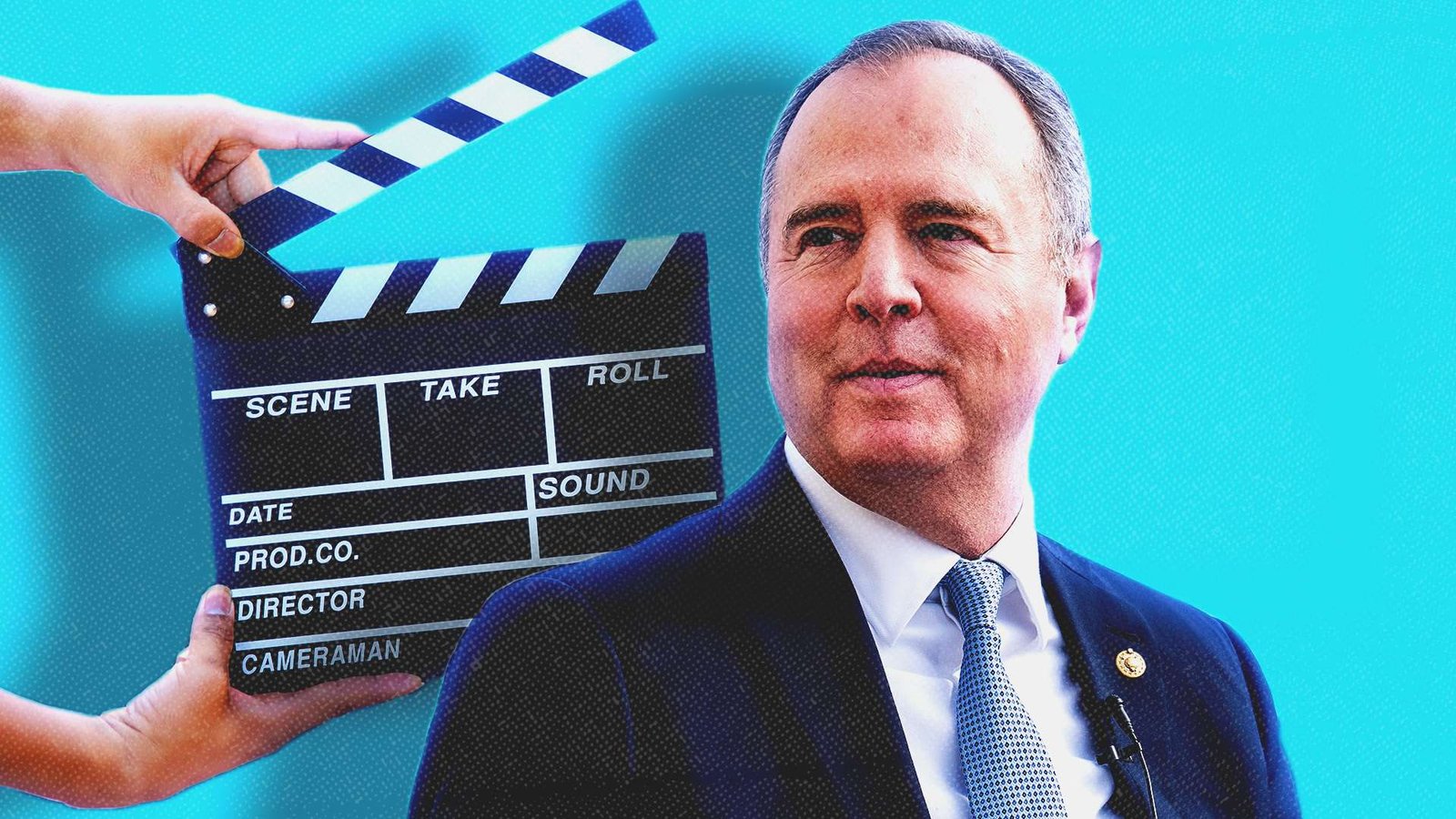
“In order to save this industry in America, we need to be competitive with tax credits,” Sen. Adam Schiff (D–Calif.) told Variety. Schiff wants a federal film production tax credit; he said in March he had “largely drafted” a bill but that he needed bipartisan support.
Last year, when President Donald Trump pledged to impose a 100 percent tariff on films “produced in Foreign Lands,” Schiff countered that, instead, “Congress should pass a bipartisan globally-competitive federal film incentive to bring back production and jobs.”
But adding a new tax credit for U.S. film production would not solve the problem. In fact, it would create new problems of its own.
More than half of all U.S. states and territories currently offer film and TV incentives.
Georgia’s program, which began in 2005, lets any studio that spent at least $500,000 filming in Georgia could claim a tax credit worth up to 30 percent of its total in-state production expenses.
Since then, states have tried to keep up, in a race to the bottom to see who can offer the most generous incentives at taxpayer expense.
That includes California: “[Gov. Gavin] Newsom doubled the state program to $750 million in 2025,” Maddaus notes. “Everyone seems to agree it should be more—maybe a lot more—and that it should cover above-the-line salaries for actors, writers and producers.”
“Even Massachusetts has better tax credits than Hollywood,” said reality star Spencer Pratt, who recently lost his race for Los Angeles mayor. In 2021, Massachusetts funded as much as 60 percent of the production budget for Don’t Look Up, a satirical film about climate change that premiered on Netflix after a perfunctory limited theatrical release.
As mayor, Pratt pledged to fight for “uncapped” production tax credits, which would mean the state can spend an unlimited amount on production incentives. But even that can’t keep cameras rolling forever. Georgia’s program is uncapped, but that didn’t stop Marvel Studios from moving production of its new Spider-Man and Avengers films to the United Kingdom, which has lower labor and production costs.
And Marvel is not alone. “Now, millions of square feet of production facilities sit empty,” The Wall Street Journal reported in January about the current state of Georgia’s film industry. “It turns out that bribing studios with taxpayer dollars isn’t a strategy to create a healthy industry—it’s a way to be out-bribed.”
Besides, studies repeatedly show that production incentives aren’t worth the cost.
“Film Tax Incentives Are a Giant Waste of Money, New Study Finds,” according to the headline of a 2016 Variety piece also by Maddaus, the author of the article this week about lawmakers’ attempts to spend even more money on them. That study found little or no film industry job growth in states that implemented production incentives.
“Consistent with studies of other state film tax incentives programs, the State of Georgia loses money,” according to a 2023 audit by Georgia State University. “We calculate a state fiscal [return on investment] of 0.19 for FY 2024, or a loss of 81 percent.”
Further, few credits actually benefited their intended recipients. Studios have very few state tax liabilities, but Georgia’s law allows them to sell any unused credits to other state taxpayers, meaning studios pocket the proceeds of the sale and the state still loses out on revenue. “Approximately 97% of credits generated in tax year 2016 were transferred to another taxpayer (e.g., sold), while less than 1% of credits were used by the production companies against their own income tax liability or their employee income tax withholding,” according to a 2022 report from the Georgia Department of Audits and Accounts.
A 2017 report found that Virginia’s tax credit “has little effect on film location decisions, a negligible benefit to the Virginia economy, and provides a negligible return on the state’s investment.”
Rather than job creators, the credits are subsidies to the wealthy. The 2023 audit found that Georgia’s incentives cost the state “$160,009 for every net job” they ostensibly create. In 2015, Massachusetts determined that its credit costs taxpayers $118,000 per job.
The simple fact is that Hollywood studios, like any other major company, will go wherever their dollar will stretch the farthest. Free money from the state is nice, but not enough to overcome cheaper costs overall.
The best option would be a feat of mutual disarmament, in which states simply get rid of their production incentives altogether. In the absence of that, the least we could do is stop throwing good money after bad.
[ad_2]
Source link
