
[ad_1]
Nobody in the United Kingdom can do arithmetic these days—especially not when it comes to the nation’s supermarkets. I once observed with amusement a shopper in the line ahead of me confused over a “Buy One, Get One Free” offer. The shopper had only brought one of said items to the checkout desk. The girl on duty mentioned the sale. “I know,” replied the woman. “But I don’t want two of them. So I’ve chosen to get the one I’ve bought for free instead.”
I now realize this mathematical moron must have been Rachel Reeves, the current UK Chancellor of the Exchequer. In a vain attempt to counteract inflation, Reeves recently floated the idea of “asking” British supermarket chains to enact “voluntary” price caps on a series of unspecified “essential goods” for the poor. In return, Reeves promised, shops would be “excused from some government policies” to save them money in return.
But, once the supermarkets refused to price-cap laxatives, lard, and latex condoms, or whatever it was Reeves thought the working classes consumed, the government immediately reverted to type by announcing that a threatened tax on product packaging would therefore go ahead as planned. It’s expected to add an extra £2bn to supermarket operating costs per year, which doesn’t seem likely to bring costs down: That £2bn, of course, will find itself being added onto ordinary shoppers’ bills by the supermarkets, who need to cover costs somehow. So, since the supermarkets will not lower their prices, the all-wise UK Government will now force them to raise their prices even more.
Reeves was pushing retailers to sell vital items to consumers at a loss. What she did not appear to realize is that supermarkets already sell their cheapest staples like milk and bread to consumers at a loss, a scheme designed to lure shoppers into their stores where they will then hopefully spend rather larger sums of cash on more unnecessary, but also more expensive, purchases like chocolate and cake. By uncanny “coincidence,” the price of the cheapest two-pint units of semi-skimmed milk in every last one of Britain’s leading supermarket chains is precisely £1.20; so they are in effect price-capping their everyday basic loss leaders collectively anyway. Reeves just wanted them to reduce prices ruinously, rather than to the level that rationality allows.
If Reeves really does want to make bread cheaper, she could do it herself, quite easily, simply by cutting de facto taxes on farming. Due to be taxed senseless in the name of Net Zero is fertilizer, which will receive a “carbon tax” of around £50-75 per ton, at precisely the same time the substance has already been rendered more expensive per ounce than heroin, thanks to the closure of the Strait of Hormuz. Possibly the UK government doesn’t realize this, but farmers need fertilizer to grow something called “food,” that very same substance the Treasury worries has gotten too expensive. Maybe a better way to lower food prices would be to scrap the stupid tax on fertilizer? Because, in effect, a tax on fertilizer is a tax on food, isn’t it? What else are farmers going to use fertilizer for? Painting their barns brown?
The last time the UK Treasury tried imposing centralized supermarket price controls, back in the 1970s, they “worked” so well that inflation only reached nearly 25 percent per annum. In 2023, when the previous Conservative administration briefly proposed something similar, Labour Party MPs condemned the idea as economically illiterate. Now the Labour Party is proposing the very same idea, and its MPs call it economically sound. Why? Perhaps because they know full well the average member of the public is economically illiterate too. When asked to estimate what supermarket profit margins are, the average guess is 50 percent. Close: The actual figure is between 2 and 4 percent.
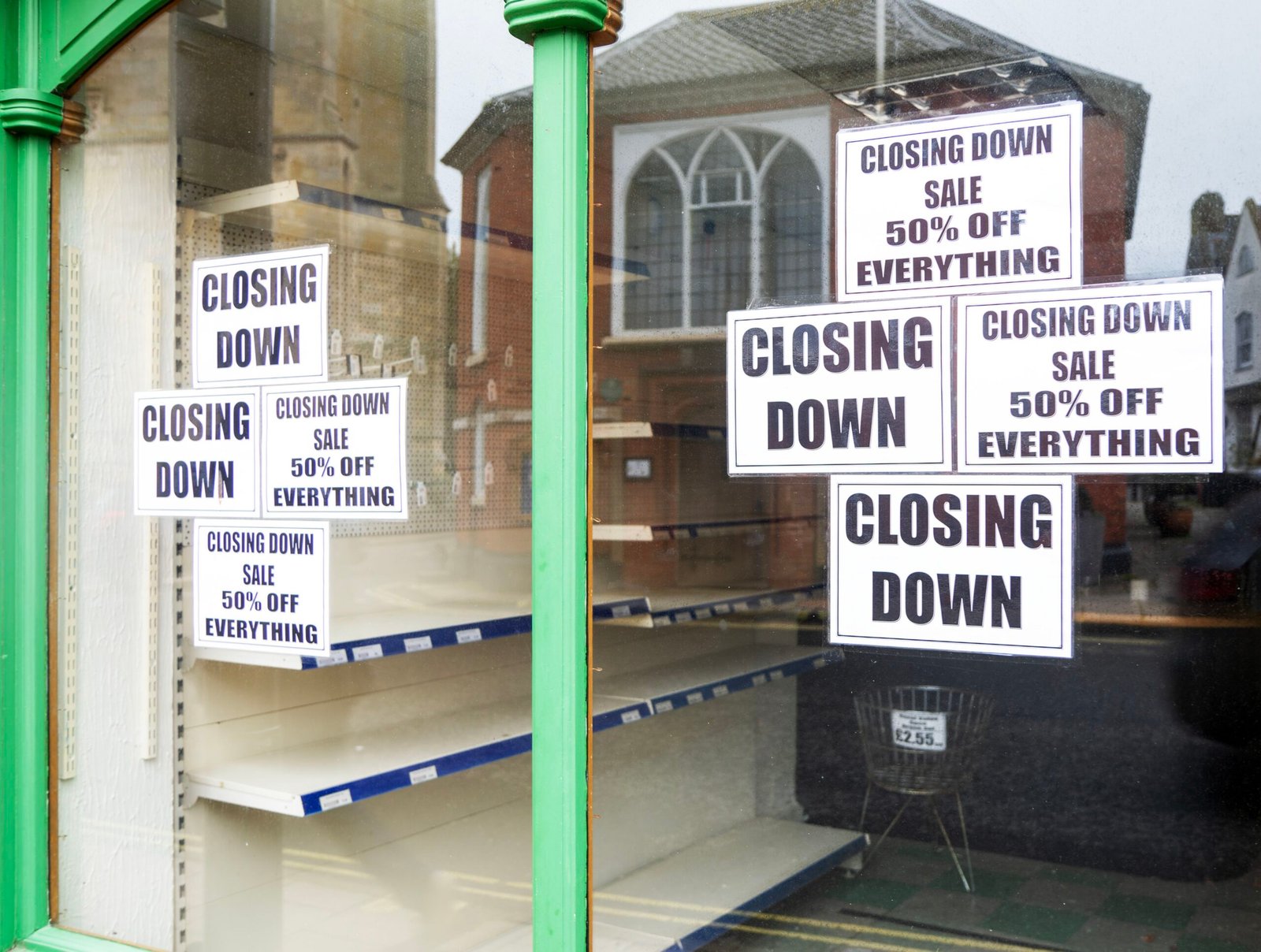
It doesn’t take much interference from scapegoating politicians to eat into that 2–4 percent and thereby render stores completely unprofitable. At the same time that Reeves was proposing that grocers actively pay customers to come in and take all their milk off their hands, major budget supermarket chain Morrisons announced it was being forced to close around 100 of its smaller stores. Though previously viable, the chain has been running at a loss, thanks to what bosses termed “significant cost increases resulting from government policy choices” relating to endless costly regulations and increased green levies on energy use.
So, idiotic policies lead budget supermarkets to close shop, and then the same government that enacted those policies complains there’s nowhere for families on a budget to shop anymore. Rather than demonizing stores as profit-hungry capitalist vampires, maybe the state should acknowledge itself as the cause of most of these problems?
To disguise her supermarket price-capping failure, Rachel Reeves stood on a gasoline forecourt and declared a “cut” in fuel taxes—a “cut” which, when you actually examined it, only meant postponing a planned 5-pence-per-liter fuel duty rise by 12 months, until the Iran War was hopefully over. No wonder a man in a white van pulled up alongside her and began shouting obscenities, accusing Reeves and her party of “ruining the country.”
Even more desperate, Reeves then announced a “Great British Summer Savings” scheme, whereby hard-pressed families would receive a series of extremely small discounts on trips to theme parks and cinemas and on children’s menu meals in pubs, facilitated by temporary cuts to VAT sales taxes on such things. According to analysis from the Institute for Fiscal Studies, the average saving produced would be a pathetic £10 per household. But, cumulatively, that would be a lot of £10s, and would cost the Treasury £300 million in lost VAT receipts.
How will Whitehall make up the shortfall? By putting an extra £300 million tax on oil companies, who, just like with supermarkets, will inevitably end up passing that cost on to the consumer, probably to the tune of rather more than £10. So, something families need, like winter heating, will now wind up costing appreciably more, whereas something families don’t need, like a summer trip to Chessington World of Adventures, will cost ever-so-slightly less. Does the current Labour leadership even understand how money works?
If they don’t, they share their ignorance in common with the likely next lot in charge. As the feeble Prime Minister Keir Starmer battles for his political life, the leading candidates to replace him as the nation’s humanoid open wallet have been lining up to demonstrate they too have dyscalculia.
The present favorite to succeed Starmer is long-serving Labour Party Mayor of Manchester Andy Burnham, whose big fiscal policy two-step is borrowing money from people and then calling them greedy for asking for it back. Famously, Burnham has spoken of Britain’s urgent need “to get beyond this thing of being in hock to the bond markets.” Of course, the best way to do that would be for the government to stop endlessly borrowing more and more money from those very same bond markets to vomit away on infinite meaningless fripperies like summer cinema tickets for kids. Andy, though, considers purchasers of government gilts to be literal bond villains and, in the words of one leading financial analyst, “thinks you can tell the people lending you money to f— off.”
Andy’s ally Paula Barker, a Liverpool Labour MP, says, “The markets will have to fall into line” behind Burnham once he becomes PM. Maybe if Burnham threatens to tax the sun for not shining, the weather will have to fall into line behind him too? Burnham aims to borrow more cash from the bond market, to spend on [INSERT TODAY’S PRETEND POLITICAL PRIORITY HERE], but somehow also to pay less interest on such loans, when every normal person knows that the more you borrow, the higher your rates tend to be. Even the very prospect of a Burnham leadership has driven the bond market into overdrive, pushing gilt interest rates up, meaning that, already, the man is costing the country more money—which he proposes to pay for by borrowing even more money, at even greater expense.
Subscribe Today
Get daily emails in your inbox
When Burnham was Manchester Mayor, paying for the consequences of his actions was no real problem. Burnham was able to just endlessly beg from central government and spend this “free” cash relentlessly, with no real consequences for himself, just for the national Treasury—a Treasury he now wants to be placed in charge of.
To be fair, Andy does have some valuable expertise in the property market. In 2005, Burnham bought an apartment in London whose mortgage interest he put on parliamentary expenses. Since then, the apartment’s value has doubled to nearly £500,000. He even began renting it out to others at a profit, whilst charging the taxpayer £17,000 a year to pay his rent on a different apartment just around the corner for him to live in, effectively gratis.
So, on second thoughts, perhaps Labour Party politicians do understand how money works after all. But only when it flows from the working man to their own bank accounts.
[ad_2]
Source link
