
[ad_1]
Ansar Allah, the Yemeni political and military organization commonly known as the Houthis, announced on Monday that they would close the Bab-el-Mandeb Strait to Israeli ships, adding ominously that they “consider all enemy movements to be legitimate military targets for our Armed Forces.”
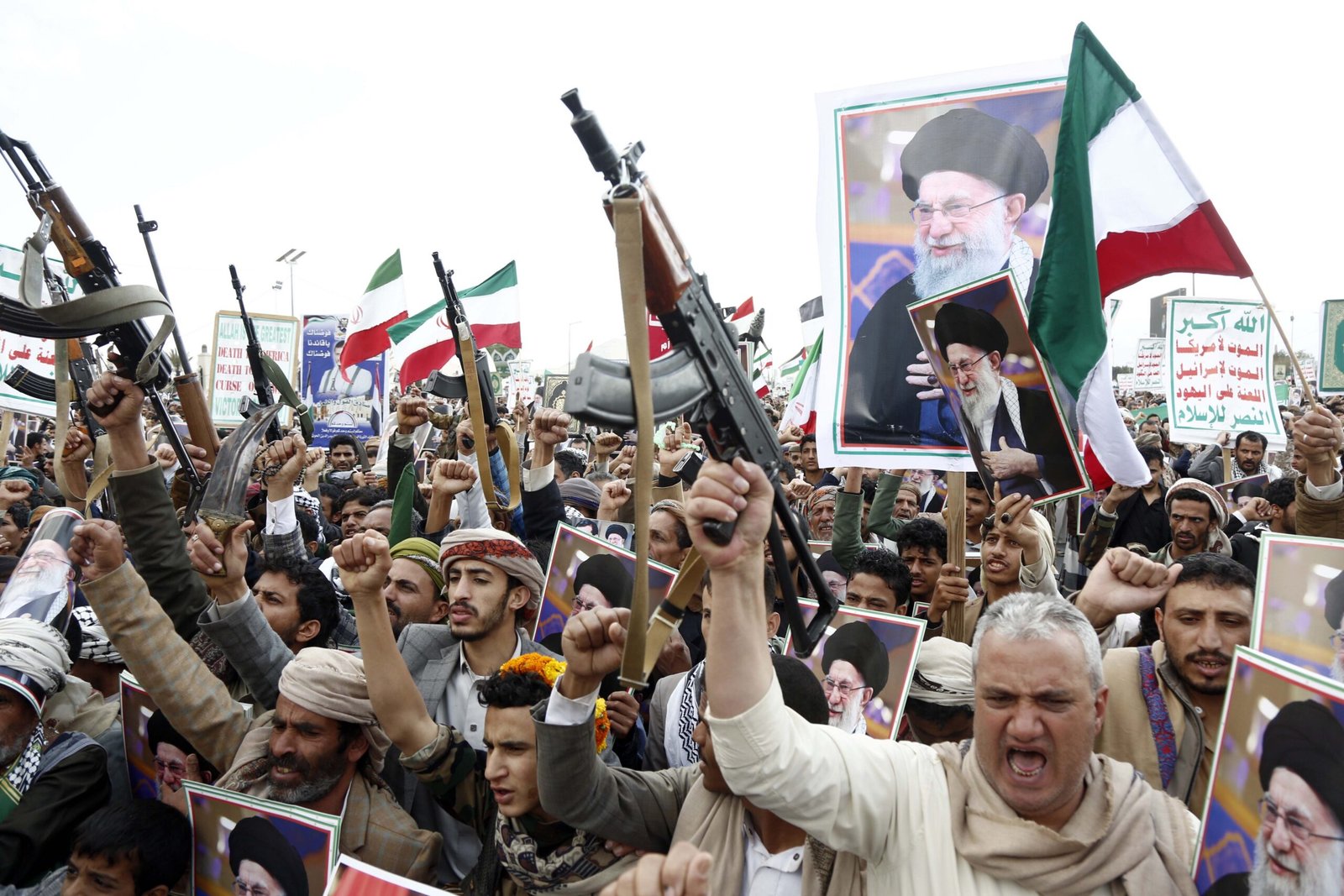
The declaration highlighted another unrealized goal of the American-Israeli war on Iran. Along with ending Iran’s nuclear program, toppling the Islamic Republic, and eliminating Tehran’s missiles and drones, the U.S. and Israel have sought to sever Iran from its forward deterrent network of partners—or what Western commentators, without nuance or real understanding, call Iran’s “proxies.”
The dramatic Houthi entrance into the war and Iran’s firing of missiles into Israel in defense of Lebanon’s Hezbollah group have clearly demonstrated that failure. The relationship between Iran and its partners has been altered, but not in the direction the Trump administration sought: Iran’s partners are more willing and able to defend Iran, and Iran is more willing and able to defend them.
That alteration has enhanced Iran’s ability to impose costs across the region, punishing actions that the U.S. and Israel once carried out with minimal resistance. The desire to preserve that freedom of action is a primary reason for the obsession with preventing Iran from getting a nuclear weapon. But this war has shown that economic deterrents can be as effective as military ones: “The Strait of Hormuz is more important… than a nuclear bomb,” Iran’s Deputy Parliament Speaker Ali Nikzad recently said. “Our nuclear bomb is the Strait of Hormuz.”
And as we were reminded this week, the Strait of Hormuz isn’t the only “nuclear bomb” that comes in the form of a key chokepoint for global trade. Iranian leaders have declared that, along with partners in “the Resistance Axis,” Tehran can shut down both the Strait of Hormuz and the Bab-el-Mandeb. Bolstering that threat, the Houthis warned that the group’s decision to close the latter to Israel might only be the first step: If the war continues to escalate, they’ll close the strait to everyone.
That’s serious. Though the Bab-el-Mandeb Strait receives less attention than the Strait of Hormuz, it is critical for two reasons. Normally, around twenty percent of the world’s oil flows through the Strait of Hormuz, hence the tumult in the oil markets since its effective closure by Tehran, and about 10 percent of the world’s oil comes through the Bab-el-Mandeb. That means a whopping one-third of the world’s oil shipments would be affected by the disruption.
The second reason is that closing the Bab-el-Mandeb Strait wouldn’t just add another big problem, but eliminate one partial solution to the existing one, blocking natural end runs around the Hormuz blockade. When the Strait of Hormuz closed, Saudi Arabia diverted more than 70 percent of its oil through Bab-el-Mandeb, helping to keep oil prices from rising even further. And, as with Hormuz, other critical resources and goods, not just oil, pass through the waterway.
Control of the straits is just the economic half of the new reality Iran is trying to impose on the region. The military half is Tehran’s unprecedented willingness to hit back hard after being struck, and even to do so in defense of non-Iranian territory, as happened after Israel attacked Beirut over the weekend. Iran had vowed to strike back if Israel struck Lebanon’s capital, and this week it made good on that promise, firing as many as 30 missiles at Israel.
Subscribe Today
Get daily emails in your inbox
It was the first time Iran had ever struck Israel in defense of one of its Axis partners. Iran called it a “formal declaration of a strategic doctrine.” Sadegh Larijani, the chairman of Iran’s Expediency Council, which advises the supreme leader, explained, “If any component of the Axis of Resistance is attacked, the response will extend beyond geographical borders and will alter the regional balance of power.”
Far from ushering in a new, more compliant regime, the U.S. now faces Iranian leaders who have concluded that Tehran’s pre-war leaders were too cautious in responding to past American and Israeli strikes. The more assertive Iranian policy, if it succeeds and continues, could transform the region. Once free to act with near impunity, the U.S. and Israel, when contemplating military action, now have to factor potentially significant costs into their calculations: If the U.S. strikes Iran, Iran will strike U.S. assets in the region; if Israel strikes Iran or one of its partners, Iran will strike Israel.
The closure of the Bab-el-Mandeb Strait and the recent round of missile strikes on Israel highlight yet one more way the war on Iran has been a failure that has achieved none of its goals: Iran has not been severed from its regional partners, but has forged a stronger relationship in which both sides will come to the defense of the other. The result could well outlive the failed war on Iran, changing the Middle East for the foreseeable future.
[ad_2]
Source link
