
[ad_1]
On one day, my healthy 86-year-old grandmother and I were waltzing through Paris in matching berets. Three days later, we were riding in an ambulance to an Austrian hospital after she fainted.
I tried to communicate with German-speaking paramedics through a phone translation app. I called my parents in the middle of the night for her medical history.
After months of preparation, a COVID-19 infection threw our carefully planned trip off course. Thankfully, my grandmother has recovered from her international emergency stay. But, our detour taught me a lot about the dos and don’ts of a healthy vacation: Do plan ahead. Don’t ignore symptoms. Do take rests. Don’t push yourself to go-go-go.
Although the headlines about hantavirus and Ebola may put travelers on edge, contracting those diseases is comparatively rare. Most travelers are more likely to experience more common infections, such as the flu, diarrhea, a cold or, like us, COVID-19. Testing my grandmother’s infection sooner and knowing her international health coverage from the jump would have saved us some pain.
Here’s what experts say are the best ways to prepare for travel and avoid infection, and what to do if you come down with something.
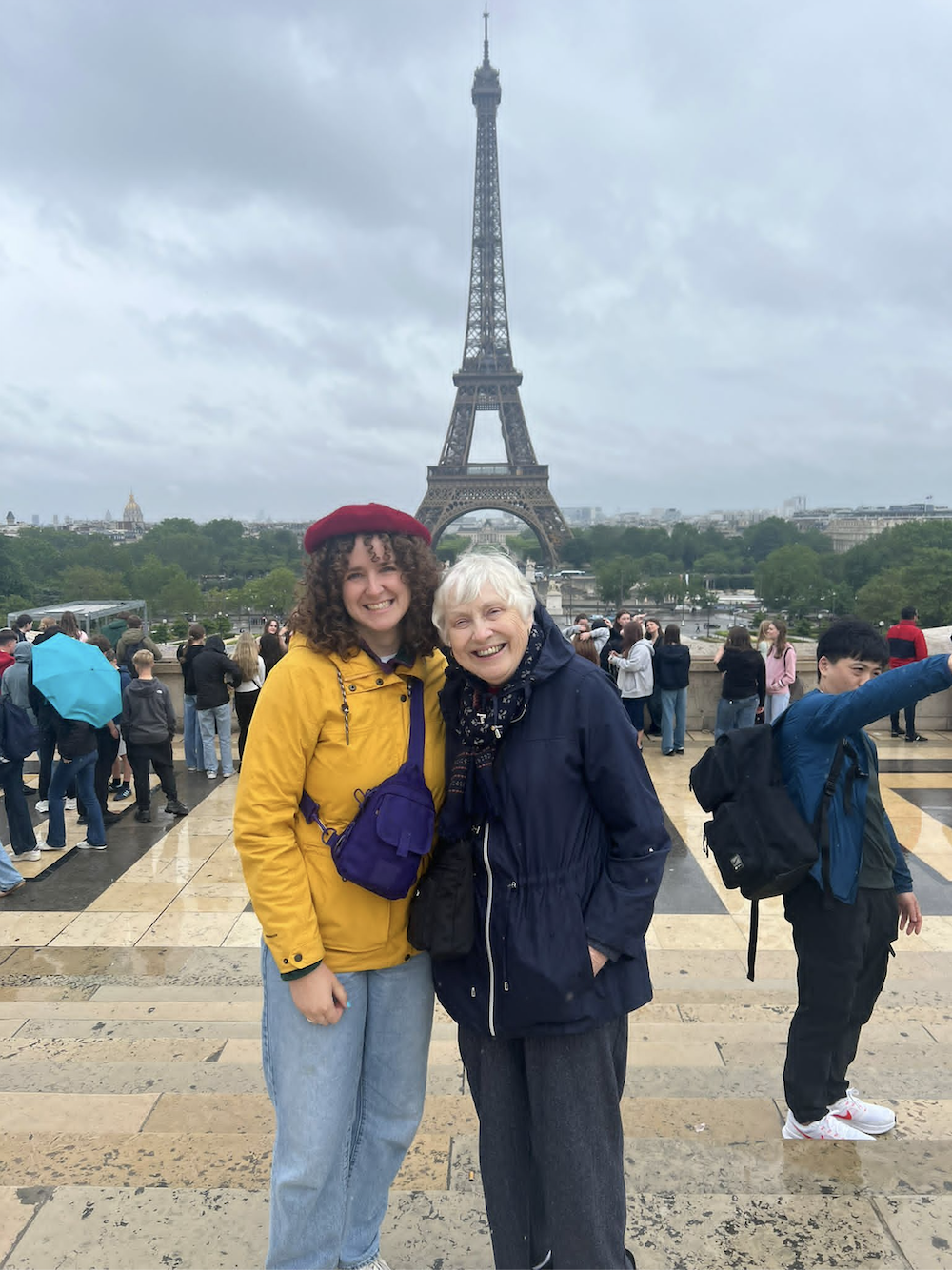
Grace Abels and her grandmother standing in front of the Eiffel Tower on May 19, 2026. (Courtesy Grace Abels)
Before you pack
Research your destination. If you are traveling abroad, check the Centers for Disease Control and Prevention travelers’ website for country-specific health advisories. Each country page includes notices of any outbreaks, recommended vaccinations for the region, and other infectious diseases that spread locally. Double check if the country requires certain vaccines for entry.
Even for domestic travel, it is worth checking whether the CDC has flagged any local outbreaks or if a specific mosquito or tick-borne illness is common in that region.
“If you don’t know about Lyme disease, Connecticut’s a pretty dangerous place,” said Dr. Kenneth Dardick, a travel medicine specialist and family medicine doctor in Mansfield, Connecticut. Lyme disease is a tick-borne illness that spreads in that region.
Check the website again a week or two before you leave to make sure there are no new outbreaks.
Assess your risk level. The risk of getting certain infectious diseases depends on your activities. Will you be going to an all-inclusive resort in a city? If so, you’re probably at low risk of catching something from livestock, for example.
If your plans include trips to rural areas, proximity to wild animals, hiking or farming, it’s worth looking into what infectious diseases or disease-carrying insects or animals you may be exposed to.
Review your packing list. What you learn from your research may influence what you pack. Do you need a mosquito net, insect repellent or long-sleeved shirts to stop bug bites? What about patches for blisters or just-in-case allergy, anti-nausea or anti-diarrheal medications?
Gather your health documentation. It’s smart to have information about your health insurance, prescriptions and medical history easily accessible.
We hadn’t assembled this information ahead of time for my grandma. Luckily she was awake and able to tell the paramedics about her health history and medications, but if she hadn’t been, I would’ve had only a partial picture.
Carry your medications in their original prescription bottles, especially for any opiates or other controlled substances. I had to decode my grandma’s medication dosages from unlabeled tiny pills in her purse.
Bring a few extra doses of regular medications in case your trip is delayed. My grandma ended up staying in Europe four additional days to recover, and was grateful she planned for that.
Decide if you need travel health insurance. Many U.S. health insurance plans have limited to no coverage for medical treatment abroad — including Medicare. Dardick recommends purchasing a short-term travel health insurance plan.
My grandma had travel insurance and it was a relief to know that getting her care wouldn’t be exorbitantly expensive. Don’t just get it though — share your travel insurance information with your emergency contact and travel companions. In our case, paramedics were shouting over one another in German as I scrambled to search my grandma’s inbox for a months-old email about her insurance.
Check in with your doctor. Dr. Robert H. Hopkins Jr., medical director of the National Foundation for Infectious Diseases, recommends scheduling a pre-travel doctor’s visit four to six weeks before you jet off.
Ensure your vaccines are up to date, get destination-specific health advice, and get any prescriptions needed for your travels. Ask about malaria, altitude sickness prevention and antibiotic medications.
“Healthy travel starts before you leave home,” Hopkins said.

Indian tourists take a horse ride in Sonamarg, northeast of Srinagar, Indian controlled Kashmir, Monday, June 8, 2026. (AP)
Staying healthy during the trip
Small, thoughtful steps can lower your risk of getting sick.
Take care on planes and trains. Unless you are road-tripping, you are likely going to share space with some strangers on your journey. Wash your hands or sanitize often.
For extra precaution, wipe down your seat and armrest when you arrive and wear a face mask during the trip. Pack medications in your carry-on luggage in case your checked bag is delayed.
Be adventurous but thoughtful. Do you want to share a new drink or food with a friend? Ask for an extra plate or glass. Traveling in a city’s packed subway car? Put on a face mask and wash your hands afterward. Heading out for the day? Apply sunscreen or bug spray first.
Most importantly, listen to the locals. If they tell you something is unsafe or will make you sick, don’t do it.
Watch what you drink. If you aren’t sure whether the water is potable, err on the side of caution. Drink bottled, boiled or purified water, and avoid ice. In places with unsafe drinking water, you should also stick to hot foods rather than salads, cold sandwiches or open buffets. When it comes to fruits, only eat the ones that you can peel yourself.
Don’t wear yourself out. It can be tempting during vacation to go nonstop to fit everything in. But if you skimp on rest, food or hydration, your body might be more susceptible to illness.
During the first half of our vacation my grandma and I were going nonstop to maximize the adventures, but tiring ourselves out could have contributed to us getting so sick.
There is no shame in an afternoon nap or a night in. Know your limits and communicate with your travel buddies if you need a break.
In this file photo, a woman cools herself outside the Palace of Westminster in London, May 26, 2026. (AP)
You don’t feel well. What now?
Even if you do everything right, there’s always a chance you will come down with something during a trip. Here are some tips for handling it.
Tell your travel companions. Ignoring the problem is tempting, but it’s best to tell people you’re with that you aren’t feeling well. It allows them to take precautions to avoid getting sick and helps them to better support you.
Feels like COVID-19 or the flu? Take a test. Many places sell COVID-19 and flu nasal swab tests over-the-counter — or you can bring your own from home. If you have symptoms that match either of those viruses, it may be worth taking a test, just so you know.
When my grandma had a stuffy nose and a cough she assumed it was a mild cold that she could push through. Had we tested earlier, we probably would’ve adjusted our travel plans and allowed her to rest, and maybe spared my exposure. Being sick is not fun, but finding out you got others sick is also a drag.
Consider seeing a doctor. If it seems more serious, look into an appointment with a local doctor. It may not be as expensive as you think.
Need help finding one? Check the website of the U.S. embassy for the country you are visiting; embassies often maintain lists of local providers under their “medical assistance” pages.
Worried you have something serious? If you are experiencing strange symptoms or anything that matches one of those infectious diseases you researched before your trip, you should seek out medical care immediately.
Tourists are seen visiting the Lincoln Memorial, Thursday, April 23, 2026, in Washington. The Washington Monument is seen in the background. (AP)
Researcher Caryn Baird contributed to this report.
[ad_2]
Source link
