
[ad_1]
Jennifer K. Rumple Prism
Deep East Oakland, California. Locals call it “Deep in the E” or simply, “The Deep.” This is where Diamond Allen primarily grew up in the early 2000s.
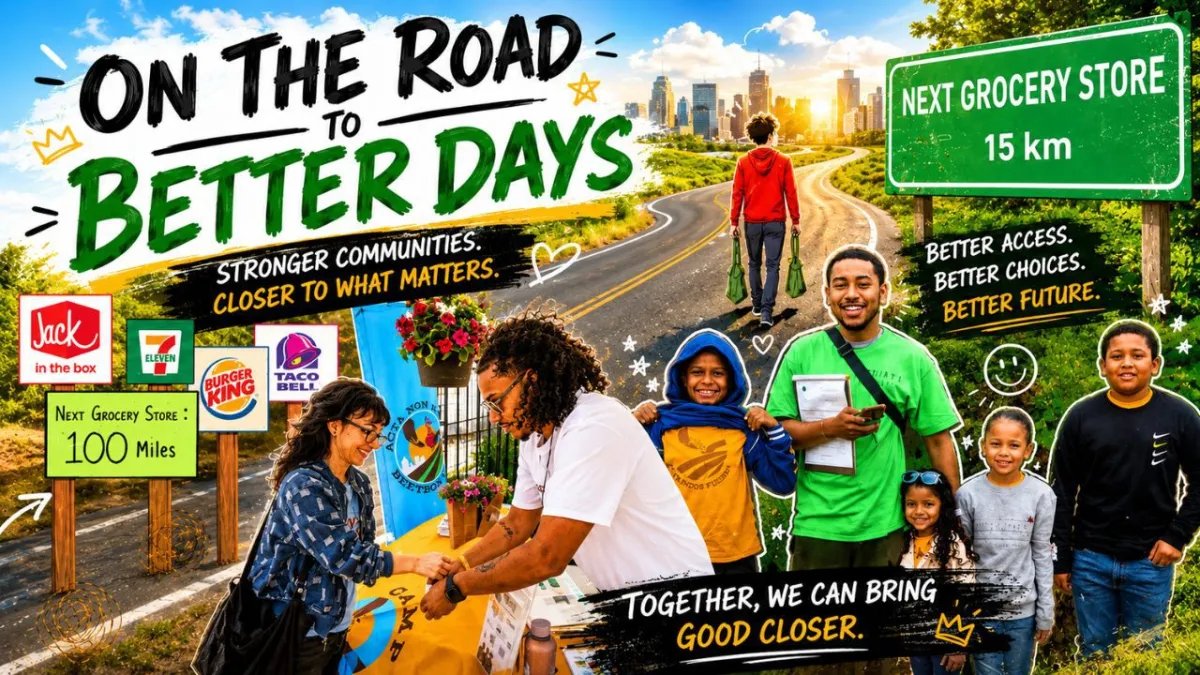
The neighborhood is made up of predominantly working-class Black and Latino families who have faced significant disinvestment and longstanding neglect of infrastructure and resources—including limited access to fresh produce and full-service grocery stores.
There were four liquor stores on Diamond’s block, he recalled. Not much else.
“I remember frequently going to the liquor store after school with my friends and buying a honey bun or a bag of chips and sugary drinks—a Calypso or an Arizona Iced Tea. Like, that was constantly where we went to get snacks as kids,” explained Allen, the eldest of five siblings.
He called his mother “the stable adult” in the home. While she didn’t have a job, she was “getting herself an education.” Their family received federal assistance through Women, Infants, and Children (WIC). The program, funded by the U.S. Department of Agriculture (USDA), provides nutritious foods such as fresh, frozen, or canned fruits and vegetables, whole grains, eggs, milk, cheese, and canned fish. But for Allen’s family, getting that food was a feat in itself.
“The nearest grocery store, like Safeway, was a good 15- to 20-minute drive. It was definitely something where we had to make an effort to go,” Allen recalled. “There were times we didn’t have a vehicle and we would get on the bus, so there was a pretty consistent reliance on the liquor stores in our neighborhood that may have sold a loaf of bread or a tomato or onion that we needed to make dinner.”
Allen told Prism that his mom did her best to cook balanced meals two to three times a week. He also ate a lot of processed meals, such as Hot Pockets and corn dogs—things he could easily heat up as a kid and snack on consistently.
“If we were in a rush somewhere or we were on the way to school, we would grab McDonald’s. It was cheap and accessible,” he said. “Being on a fixed income, you could feed your family without breaking the bank.”
For kids growing up in so-called food deserts, where it’s difficult to buy affordable or quality food, eating fast food on a daily basis is not out of the norm. However, fast food—which lacks nutrients and is heavy on fat, sugar, and salt—increases the risk of obesity by more than 50% from childhood to adolescence, according to a 2024 Harvard University and National Institutes of Health (NIH) study published in the Journal of the American Medical Association Pediatrics.
While citing ample data to support the claims that poor diet, exposure to environmental chemicals, lack of exercise, and chronic stress are key concerns facing children’s health, the White House’s “Make America Healthy Again” report released earlier this year still suggests that diet alone can reverse the burden of chronic disease. However, health is not about individual choice; it’s about the choices available to the individual. According to experts and advocates who spoke to Prism, the food system in the U.S. helps explain how poor nutrition affects children, particularly in low-income communities of color.
A discriminatory food system
Farmer and food justice advocate Karen Washington said the food system is not broken, but rather it is functioning by design. She coined the term “food apartheid” to better explain how access to healthy, affordable food is not evenly distributed, but determined by policy, economics, and power.
“When I first heard the term ‘food desert,’ it just didn’t sit right with me. Being an organizer, it just reminded me of redlining around housing to signal areas that were not liked by people with power and privilege,” explained Washington, who grew up in The Bronx, New York, and has been instrumental in creating urban farms and funds for people of color. “I’m saying you’re missing the problem. We have food: We have junk food, we have fast food, we have processed food. We [have] a full system that is designed with the intention of discriminating people based on their race, where they live, and how much money they have.”
We have food: We have junk food, we have fast food, we have processed food. We [have] a full system that is designed with the intention of discriminating people based on their race, where they live, and how much money they have.Karen Washington, farmer and food justice advocate
The roots of food apartheid go back decades. Redlining shaped where people could live and where investment followed. Grocery stores clustered in wealthier neighborhoods, whereas in low-income communities of color, they disappeared or never appeared at all. Fast-food chains and convenience stores stepped into the gap, offering inexpensive, highly processed food that was easy to access and sell. Over time, these patterns became an ecosystem.
“I want people to look at the full system through the eyes of communities of color and see that the quality of our food is based on where you live. Living in a low-income neighborhood is totally different from someone living on 5th Avenue,” said Washington. “They’re telling us to eat healthy, fresh, organic food. It’s expensive. In the hood, every block used to be liquor stores; now it’s fast-food chains. It’s intentional. We have the food that we have, while we have diet-related diseases that we have. It’s all intentional. It’s just apathy. They don’t care as long as money is being made.”
Marion Nestle is a molecular biologist and public health expert specializing in nutrition and food politics. She agreed that these food conditions were manufactured, adding “there is no accountability” for actively engineering the conditions that have shaped what children eat and how they live.
“Supermarkets do not go into low-income neighborhoods, making this a structural, not accidental issue,” Nestle told Prism. “Food companies are not social service agencies. They are businesses with stockholders to please as their first priority. … Supermarkets do not last in such neighborhoods. Instead, dollar stores move in to fill the gap.”
A 2023 report from the Brookings Institution noted how food apartheid is produced by structural racism in residential and investment patterns, such as supermarket redlining. It also states an estimated 19 million people in the U.S. live in areas where they have few to no convenient options for securing affordable and healthy food. One region of the country is hit hardest by this reality: the South. Nine of the top 10 states with the greatest share of residents living in low-income, low-food access areas are in the South, according to the USDA’s Food Access Research Atlas’ 2025 analysis.
Nestle, a nutrition and food studies professor at New York University, said what makes these issues more challenging is that American society does not institutionally support children. She said there is little or no government support for housing, preschool childcare, and child healthcare, except for the very poor.
“And that is inadequate. WIC serves roughly half the women and children eligible for it. [The Supplemental Nutrition Assistance Program] is under attack. The quality of school meals depends on the neighborhood wealth and is demonstrably worse in poor neighborhoods. So is the quality of education in general,” she said.
The South is also home to some of the worst-performing public school systems in the country, due to disinvestment from local, state, and federal governments.
Washington told Prism that education is key to empowering communities harmed by food apartheid. Urban farming is also proving to be a powerful tool in making healthy food more accessible.
Urban farms: elevating quality of life
Urban farming—the practice of cultivating, processing, and distributing fresh food within cities and suburban areas, utilizing spaces such as greenhouses, vacant lots, rooftops, and backyards—has exploded in recent years.
Urban farms not only help create food security, but they also provide engagement and nutritional programs for the communities they serve. Allen, who grew up in Deep East Oakland, was around 12 years old when a family friend introduced him to the Youth Urban Farm Project at Acta Non Verba (ANV). The organization, whose name means “action not words” in Latin, is also located in Deep East Oakland and was founded and is primarily led by women and people of color.
Allen credited his participation in ANV as the reason he began eating healthier and prioritizing his nutrition. He didn’t consider himself overweight, but remembered being “bigger than most kids” his age and “a little more out of shape.”
“I started to get involved and learned about what growing your own veggies looked like. We would have conversations about food deserts and how in our community there are more sugar options than healthy restaurants,” he remembered. “I learned about healthy eating options that families like mine, who might not have a vehicle, can always access or even afford.”
ANV Executive Director Leisel Whitlock Petersen said the organization’s top mission is to elevate quality of life and spark joy for young people and families through urban farming, access to nature, cultural enrichment, and healthy food.
“Our approach is about helping young people (focusing especially on those most impacted by food apartheid) build meaningful relationships with the natural world,” she said in an email. “We center experience and connection so youth can understand their place within larger ecological and food systems.”
Washington’s food justice work started with her first community garden in The Bronx more than four decades ago. She now co-owns Rise & Root Farm, located in New York’s Hudson Valley. For her, urban farming is an overtly political act.
“We have a system that is not by us or for us,” she explained. “So for change to happen, it’s all of us coming together for the betterment of our communities and working together. If the supermarkets are not coming to the neighborhoods, then let’s make our own by way of vegetable stands, mobile markets, you name it.”
Would policymakers and public health leaders better understand the connection between food access, systemic inequity, and children’s health if they spent time with young people on an urban farm? Whitlock Petersen said these leaders already know what’s at stake. What’s needed, according to the ANV executive director, is for those with power to begin treating access to healthy food as “essential infrastructure for public health.”
“Invest in it and protect it like our lives depend on it (they do by the way).” Whitlock Petersen said. “Create policy that ensures children don’t have to leave their neighborhoods to experience care, beauty, and enrichment. They should be able to expect these things where they live. … Every child deserves access to environments that nourish their bodies and regulates their nervous systems. Every child deserves to have what they need to be healthy.”
Change, grow, and thrive
Childhood diabetes is a growing public health issue. It’s one of the most common chronic diseases among American children and adolescents under age 20. The prevalence of Type 2 diabetes between 2001 and 2017 increased by 95%, with the largest increases among Black and Latino youth, according to an NIH report published last year.
At the same time Allen was learning about healthy eating and taking that knowledge back to his family and community, he suffered an injury while playing basketball. He was diagnosed with slipped capital femoral epiphysis, when the top of the thigh bone slips backward at the weaker cartilage area of the still-forming hip joint—a serious hip disorder linked to obesity that is most common in preteens and teens.
“I remember the doctor telling me, ‘This is probably because you’re overweight.’ That was the moment I started to really look at myself and be like, ‘OK, maybe I am overweight. What does that mean? How am I in control of this?’” Allen said. “It just put kind of a perspective around me thinking I was taking good care of my health and myself. But I got injured because there was something going on with my health.”
Dr. Heloisa Junqueira is a pediatrician serving largely farmworker and low-income families at Natividad Medical Center in Salinas, California. She told Prism that she has seen an alarming rate of children experiencing diet-related conditions at young ages. She described 9- and 10-year-olds with chronic constipation from low fiber intake, severe dental decay from excessive sugar consumption, and more serious diagnoses such as prediabetes and Type 2 diabetes. The doctor said she’s treating patients for high-blood pressure before they reach their teenage years.
“I think it’s very dangerous,” Junqueira warned. “We’re going to have a generation with very young Type 2 diabetes and hypertension.”
“And you can abstract until you’re at least 13, so you don’t know the things you’re doing as a child are going to impact you as an adult,” she added. “Low fiber intake increases your risk of colon cancer, which doesn’t happen right away. It shows up in your 50s. The things you’re doing as a child are going to impact you as an adult.”
The American Cancer Society’s latest statistics, released in March, are sobering. The lifetime risk of developing colorectal cancer is about 1 in 25 men and 1 in 26 women. The report estimates this year, 158,850 new cases will be diagnosed in the U.S., with 55,230 deaths. It is the leading cause of cancer-related death in young people under 50, and incidence rates in this age group have nearly doubled since the early 1990s. Data shows that those rates among Americans ages 20 to 39 could increase by 90% by 2030.
Western diets low in fiber and high in processed meats, fat, and sugar are largely to blame since they’re known to alter the gut microbiome, contributing to chronic inflammation. Junqueira said it’s not uncommon for the large population of immigrant families she serves to adopt American eating habits.
“[They] think, ‘This is what American kids eat, and American people are successful.’ They’ve never had access to that. So they think it’s a good thing to feed their kids processed foods and the typical American diet, which is a big problem,” Junqueira explained. “That, combined with the fact that processed food is high fat, high salt, high sugar with a long shelf life and very cheap, you can feed a family of five. You’d never be able to feed them fresh produce and unprocessed foods with the same amount of money.”
The problem is also generational. For parents who grew up with food scarcity, being able to provide packaged “American” foods could feel like progress—even if those foods can carry long-term health consequences.
The challenges for young people who develop chronic health issues due to food apartheid may extend beyond physical health. Many children can also experience mental health issues due to bullying and weight-based discrimination.
Junqueira said meaningful change must start with the entire household, not just the child. This was echoed by every food justice advocate who spoke to Prism. They said education is critical, especially as it relates to helping families understand nutrition labels, portion sizes, and how to make incremental shifts within their means.
“Programs that pair education with access like produce prescriptions and nutrition classes can help, but remain limited in reach,” Junqueria said. “Broader changes would require shifts in how food is distributed and supported from federal nutrition programs to what is served in schools.”
Junqueria estimates about 10% of the children she treats for weight-related health issues are able to significantly reverse course, usually when their family can shift shopping, cooking, and eating habits.
Allen is an example of a person who reversed course when he was young, thanks in large part to the education, access to fresh food, and hands-on experience ANV provided. He learned that the best meals come from ingredients grown in the ground, not found in wrappers.
Learning about different vegetables, such as chard and kale, helped him feel “more in control” of creating a balanced plate, he explained. This is knowledge he took home, working with his mom to incorporate these vegetables into family recipes and everyday foods his family was already eating.
He then spread that knowledge to his community.
“ANV helped give me the guidance and experience to be able to take those important conversations about food, nutrition, and access and share them with neighbors, just pay it forward in that respect” he added.
Working on the urban farm also helped Allen develop leadership skills. Now 25 and living in Los Angeles, he’s ANV’s board chair after serving as a member for four years.
He said his board role allows him to do the work he’s most passionate about: helping young people from Oakland’s underserved communities change, grow, and thrive.
“I do want to continue to have an impact on my community, and I very much look at Oakland as the community that raised me and made me who I am today,” said Allen.
Without intervention, Allen said, unhealthy cycles will not only continue, but worsen.
“It’s going to be a cycle that consistently repeats itself,” Allen said, “and as we continue to stand by and watch more fast food restaurants get built in our communities, we’re moving farther away from healthy eating and living.”
Editorial Team:
Tina Vasquez, Lead Editor
Lara Witt, Top Editor
Rashmee Kumar, Copy Editor
Award-winning Journalist, Investigative Reporter and Executive Producer Jennifer K. Rumple has more than 20-years experience digging deep into stories that matter most to communities. She’s earned numerous Emmy nominations and awards throughout her journalism career. Her work can be found across multiple-media outlets like KGO-TV/ABC7 News, Bay Area News Group and CNN. Jennifer has led creative teams and developed content for life sciences, tech and nonprofit organizations.
Editor’s Note: At a moment when the once vaunted model of responsible journalism is overwhelmingly the play thing of self-serving billionaires and their corporate scribes, alternatives of integrity are desperately needed, and ScheerPost is one of them. Please support our independent journalism by contributing to our online donation platform, Network for Good, or send a check to our new PO Box. We can’t thank you enough, and promise to keep bringing you this kind of vital news.
You can also make a donation to our PayPal or subscribe to our Patreon.
Please share this story and help us grow our network!
[ad_2]
Source link
