
[ad_1]
Monday began with a statement issued by the Iranian Ministry of Foreign Affairs cautioning that the United States and Israel, by their egregious violations of the ceasefire concluded on April 8, are jeopardizing the ongoing talks aimed at achieving an armistice. The ministry, which is headed by Abbas Araghchi, underlined that the ceasefire involved a cessation of hostilities on all fronts.
The ministry accused the United States of repeatedly violating the ceasefire by its attacks on commercial Iranian shipping. Moreover, it said, Israel has grossly violated the ceasefire by launching a vicious attack on Lebanon, violating its sovereignty and killing or wounding thousands of Lebanese and displacing two million, while destroying essential infrastructure.
The ministry said that the US has a direct responsibility to cease attacking Iranian shipping and an indirect responsibility to rein in the Israel atrocities, warning that Iran will take measures to act in self-defense to ensure its interests.
The Tasnim news agency, which is close to the Iranian Revolutionary Guards Corps, reported that these violations of the ceasefire, especially the Israeli invasion and devastation of south Lebanon, had led the Iranian side to cease all talks and the exchange of texts through mediators.
The agency said that the Iranian government insists on the end of Israeli operations in Gaza and Lebanon and its complete withdrawal from Lebanon. Otherwise there will be no further dialogue with the United States.
Moreover, the report said, Iran is determined to block the Strait of Hormuz completely, and to activate further fronts, including the Bab al-Mandeb or “Strait of Tears” at the mouth of the Red Sea. The Red Sea has been an alternative route for shipping, including of oil and gas, given the closure of the Persian Gulf.
The official status of these threats is unclear, according to BBC Monitoring .
Israel has sent troops deep into Lebanon and has expelled some 275,000 people from the metropolitan area of the coastal city of Tyre in the south, making threats to level the suburbs of Beirut where Shia Muslims predominate and to bomb the Lebanese capital. Hezbollah has continued to fight back against the Israeli invasion, showering northern Israel with rockets and sometimes managing to kill or wound Israeli troops and to take out Merkava tanks.
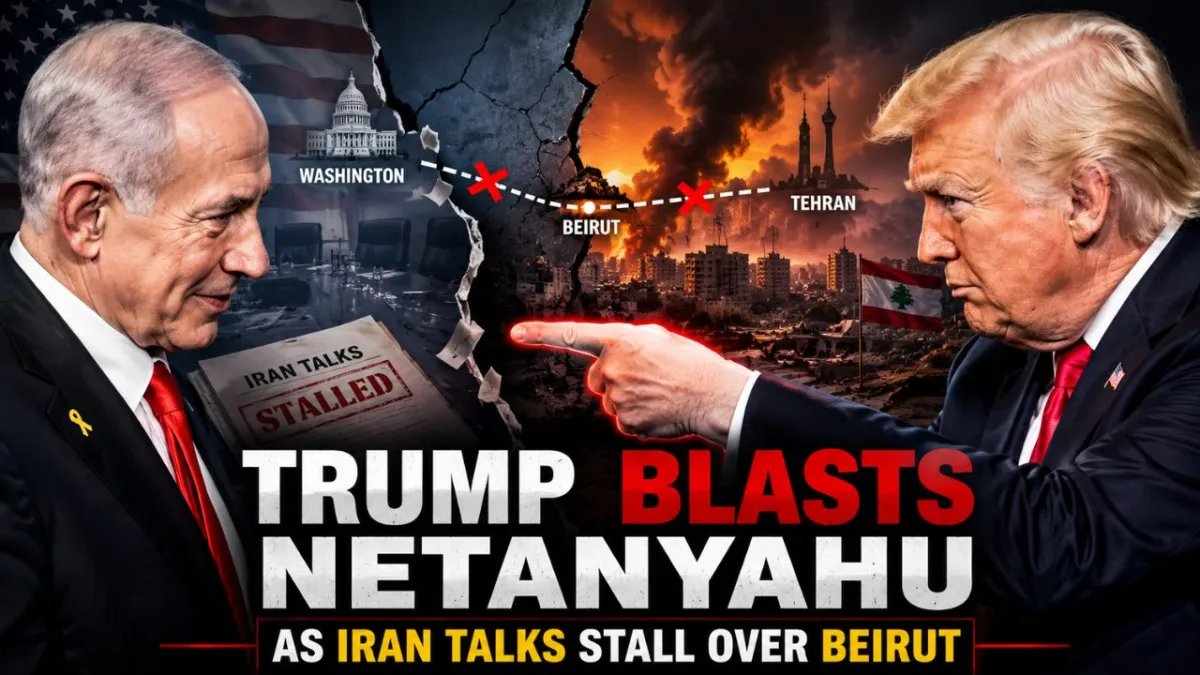
Asked about these reports of a halt to negotiations by CNBC’s Eamon Javers, President Donald J. Trump replied , “I don’t care if they’re over, honestly.” In case the message wasn’t clear, he repeated, “I really don’t care. I couldn’t care less.” He complained that the talks had “started to get very boring.”
Trump attempted to intervene in reality by Tweet, saying he would ask Israeli Prime Minister Benjamin Netanyahu “what’s going on with Lebanon.” He thundered, “There will be no Troops going to Beirut, and any Troops that are on their way, have already been turned back.”
He claimed to have spoken to Hezbollah indirectly, saying, “they agreed that all shooting will stop — That Israel will not attack them, and they will not attack Israel.”
Netanyahu remained defiant, boasting of having taken the Crusader castle Beaufort and threatening, “if Hezbollah does not cease attacking our cities and citizens—Israel will attack terror targets in Beirut. This stance of ours remains unchanged. In parallel, the IDF will continue to operate as planned in southern Lebanon.”

View from Beaufort Castle, Lebanon. Public Domain. Via Picryl
Barak Ravid at Axios reported that according to a US official, Trump’s phone call to Netanyahu was explosive, with the American president “pissed off” about Netanyahu’s threat to bomb Beirut. Ravid reports that his source alleged Trump told the prime minister, “You’re fucking crazy. You’d be in prison if it weren’t for me. I’m saving your ass. Everybody hates you now. Everybody hates Israel because of this.”
Trump for his part insisted that the negotiations with Iran were continuing “at a rapid pace.”
Many energy analysts believe that if the closure of the Strait of Hormuz continues through the summer, by September we could see $200 a barrel petroleum and a severe global economic recession. The consequent economic crisis domestically could produce a blue wave, i.e. a big Democratic victory in the midterms, which would hobble Trump in his final two years in the White House.
Juan Cole is the founder and chief editor of Informed Comment. He is Richard P. Mitchell Distinguished University Professor in the History Department at the University of Michigan He is author of, among many other books, Muhammad: Prophet of Peace amid the Clash of Empires and The Rubaiyat of Omar Khayyam. Follow him on Twitter at @jricole or the Informed Comment Facebook Page
Editor’s Note: At a moment when the once vaunted model of responsible journalism is overwhelmingly the play thing of self-serving billionaires and their corporate scribes, alternatives of integrity are desperately needed, and ScheerPost is one of them. Please support our independent journalism by contributing to our online donation platform, Network for Good, or send a check to our new PO Box. We can’t thank you enough, and promise to keep bringing you this kind of vital news.
You can also make a donation to our PayPal or subscribe to our Patreon.
Please share this story and help us grow our network!
[ad_2]
Source link
