
[ad_1]
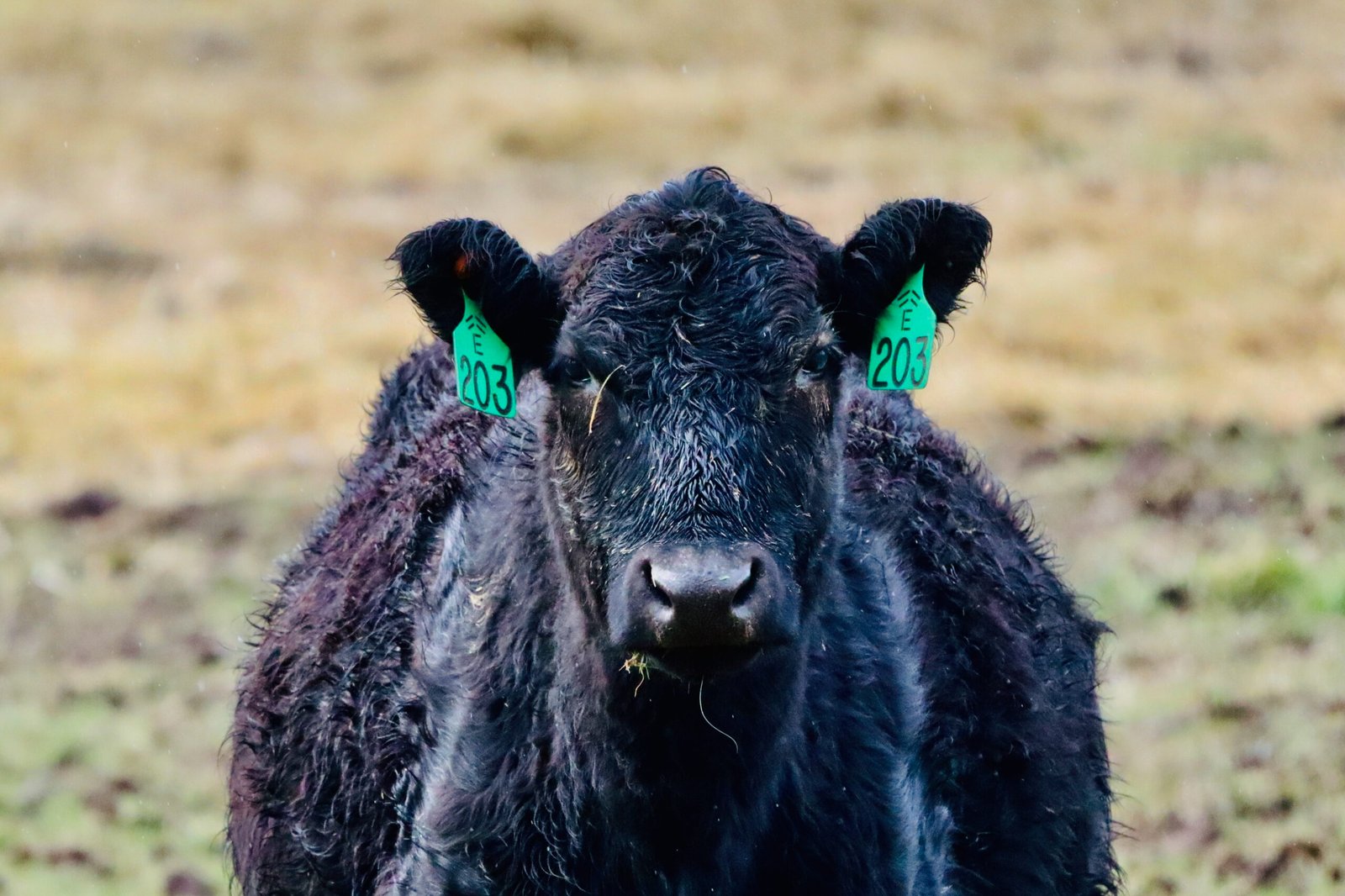
Cow on grazing allotment in Central Oregon. Photo: Jeffrey St. Clair.
We now have the Administration giving 1.4 million acres of our National Forest in Alaska to facilitate the destruction of the Arctic environment for oil. We have the Iran war and blockade. Public land and National Forest protections are being eliminated with laws enabling fake wildfire projects to further expand clearcuts and eliminate old growth in our National Forests. Public input is being done away with, and now we propose a giveaway of our public lands to the livestock industry.
Then, I read that Golden Eagles are being targeted in Wyoming because they take out lambs. Nothing is said about the destruction of hundreds of millions of acres of Western public land by livestock and the loss of native wildlife. Our Wyoming wolf populations have been decimated by disease, yet the hunt will still go on while traps abound. Our illogical elk feed grounds continue concentrating thousands of elk to benefit the guiding and outfitting businesses and ranchers. This concentration leads to increasing mortality from hoof rot and chronic wasting disease, and environmental contamination with prions. Predators and carnivores are killed for recreation when they are nature’s way of countering the spread of disease.
This is the mere tip of the iceberg of bad news for our public lands and the West. It got the population ecologist in me thinking about the bigger picture, the picture I have had in my head for decades. That is our worship of growth and its consequences. Growth in numbers and consumption accompanied by the total inadequacy of regulatory protection for our public lands. I always felt we would sacrifice the last of our pristine environments for growth, while our captured agencies would continue the rape until it is all gone. We have social media and Xbox, so who cares? I care and here is where I see us going, and why, and soon. Whether we transform our system is the question.
Jared Diamond’s book, Collapse, describes societal failure due to environmental damage, climate change, hostile neighbors, and decreased support from friendly neighbors. Societies succeed or fail depending on how leaders and institutions react. In a study spanning 5,000 years of human civilization, Luke Kemp’s book, Goliath’s Curse, describes how societies collapse when elites consolidate power and wealth, leading to weakened societies. Kemp warns that modern society functions as one large, interconnected, global “Goliath” (capitalism), which makes it highly vulnerable to a “worst-ever” collapse, driven by climate change and extreme inequality.
In a lecture by archaeologist Eric Cline on the Bronze Age Collapse, he described the interconnected nature of societies of the time and their dependence on each other for essential goods and trade in general. A combination of severe drought, crop failure and famine, coupled with invasions, earthquakes, and disease, led to the collapse of the system, death and destruction, and a 400-year Dark Age. Societies failed to adapt by transforming their systems. With our climate heating up, rivers and streams depleted, war in Iran, a race to nowhere with China, and alienation of NATO, we seem to fit the description. Ehrlich’s book, The Population Bomb, was considered alarmist, but in a recent interview on 60 Minutes, he said, “The next few decades will be the end of the kind of civilization we’re used to.”
Our society is driven by growth. Growth in GDP and the consumption needed to fuel that growth. Growth at all costs. The world human population is 8.2 billion, expected to grow to 10.3 billion in the 2080s. The U.S. population is projected to grow from 152 million in 1950 to over 400 million in 2050. UNEP reports that the use of materials or resources could increase 60% by 2060.
U.S. GDP per capita has grown from an estimated $25k in 1950 to a projected $88k in 2050 in constant 2024 dollars. Our current national debt of $38 trillion is over 120% of GDP, with this year’s deficit of over $2 trillion continuing into the future as spending remains out of control. Servicing this debt is expected to grow from $1 trillion in 2026 to $2.1 trillion in 2036. If this results in more countries abandoning the dollar, interest rates will have to rise, making the situation worse. AI and the data centers are being funded by a debt binge of junk bonds. What happens when interest rates rise and stocks drop in value? Loss of confidence leading to recession, depression, and collapse?
Since the beginning of the Industrial Revolution, the world has grown exponentially in population, energy consumption, and war-making capacity. Exponential growth is inevitably followed by decline as resources become limiting. Eventually, the population or economies collapse.
According to Consumer Reports, the United States currently has over 3,000 operational data centers, with another 1,489 facilities planned or under construction. Energy demand from these could double between now and 2028, going from 80 to 150 gigawatts. This is about 4% of total U.S. Energy Demand, but could grow to 12% by 2030. At the minimum projected power demand of 80 gigawatts, this translates into about 80,000,000 kilograms of rare earth minerals, or double that at the high end. This means accelerated mining and more environmental destruction, along with increased utility costs for consumers.
Conservation is not an issue in the Administration or Congress. Even knowing that deforestation is a major driver in loss of biodiversity and carbon storage, we give free rein to logging our forests. This is while global deforestation continues to exceed 20 million hectares each year. In the last 10,000 years, we have gone from 10.6 billion hectares of Earth’s land covered in forests, shrublands, and grasslands to 4.1 billion hectares. This is driven by agriculture, logging, infrastructure development, forest fires, fuel wood collection, mining and extraction. Over 3 billion hectares are grazed by livestock, destroying biodiversity and carbon storage, while emitting 18% of global greenhouse gas emissions.
Despite international pledges like those at COP28, current emissions remain nearly double what is required to hit conservation targets. To align with a 1.5°C pathway, global emissions must fall by 35%–55% by 2035 compared to 2019 levels. Under current national pledges, the world is instead heading toward a temperature rise of 2.5°C. The response of the United States was to withdraw from the Paris Agreement, abandoning a pledge to reduce emissions by about 50% by 2030.
Global Footprint Network’s U.S. state report notes that the U.S. population uses “twice the renewable natural resources and services that can be regenerated within its borders.” On a global fair-share basis, the overshoot is much larger. If everyone consumed like the average U.S. resident, Earth Overshoot Day in 2026 would fall on March 14, meaning the annual global ecological budget would be exhausted in about 73 days. That implies a consumption rate of about 5 Earths, or roughly 400% above global regenerative capacity.
We’re already in the Anthropocene Extinction with massive declines (70% or more) in animal populations. Habitat loss and overexploitation are key factors. In the U.S., we have lost nearly 3 billion birds since 1970. We are not transforming our system to adapt or cope. More so, we are increasing consumption and exploitation, continuing the loss of those very landscapes that could store carbon and save water and wildlife. And there is silence from our government.
Most of our water in the West is used to grow forage for livestock or irrigate pastures. Studies of the Colorado River Basin estimate that roughly half of the diverted water is used to grow cattle-feed crops such as alfalfa and grass hay. Across the broader western U.S., cattle-feed production accounts for about one-third of total water consumption. Agriculture itself uses roughly three-quarters of developed water supplies in much of the West, an arid region where it should never have happened.
Here in Wyoming, an emergency authorization was issued by the State Engineer to allow changes in water diversions for livestock use as existing sources are drying up. Other states are cutting back because there’s not enough water to go around. Think of the Colorado River and the loss of storage in Lakes Powell and Mead. The reservoirs are 23 and 31 percent full, so water managers are looking to drain more water from upstream sources. In our area there are renewed suggestions to pump water from the Hoback River to the Green River to provide water to Lake Powell.
Wyoming ranchers have begun selling off cattle due to drought, but this is no ordinary drought. It is the continuation of a downward spiral in snowpack due to higher temperatures. Nebraska and Colorado are doing the same. Does this foretell the end of public lands ranching in the West? Some 250,000,000 acres of our public lands are grazed by livestock, resulting in a tremendous loss of biodiversity and productivity. The cessation of this practice would begin to transform the West from a feedlot to a wildlife paradise.
In our work on Western public lands, we have consistently documented that the current ecosystem has been so altered by livestock grazing that key species of native grasses have been lost, and annual production of forage has been reduced more than 75% from potential, yet livestock grazing continues. The federal agencies and ranchers are in denial.
The soil has been denuded and compacted by livestock. This has led to the loss of water infiltration and depletion of groundwater from an already shrinking precipitation input. Consequently, springs and streams fed by this water have been or are being lost. This has resulted from the total failure of the BLM and Forest Service to manage according to law and science. This reflects the power of the livestock industry, a small minority in the economies of the West, but with extraordinary power over these agencies through their congressional allies. (Read Deborah Donahue’s book, The Western Range Revisited)
As our economy falters under the weight of debt and interest payments, perhaps the massive subsidies propping up the western livestock industry, which provides less than 2% of our beef, will end. With that ending, public lands ranching could very well dry up along with the streams. Perhaps the alfalfa crops will be gone as we place a higher value on water for the broader good. How many other heavily subsidized industries, such as the timber industry, would no longer be destroying our forests when high interest rates or economic collapse destroy demand due to a collapse in home construction?
As a people and a government, we are blind to the consequences of our actions and refuse to act. We could, if we were respectful of nature, or our grandchildren, transform our system by reducing consumption, setting aside continental scale refugia, areas of tens of millions of acres like the Northern Rockies Ecosystem Protection Act would provide. We could implement continental-scale wildlife migration corridors so populations could survive as climate warming drives them to move, or they can blink out. We could aim for E.O. Wilson’s Half Earth. Better buckle up and get to work and make the transformation, shouldn’t we?
At Yellowstone to Uintas Connection, we are working to restore and protect the wildlife corridor that connects the Greater Yellowstone Ecosystem to the northern and southern Rockies. Because of our concerns about the lack of knowledge of nature and the loss of that knowledge among young people, at Kiesha’s Preserve, we are providing nature education using our nature trail and camping facility. For the local community, we have converted a greenhouse operation into a community garden and teaching facility to teach gardening and food preservation. These are elements of being self-sufficient and recruiting new young lovers of nature to fight on behalf of nature.
[ad_2]
Source link
