
[ad_1]
The strategic and spiritual resonance of the Strait of Hormuz is deeply woven into Iran’s identity. It represents a profound geographic constant in Iranian history. This narrow waterway has served as a central artery for Persian political and economic power, historical consciousness and culture across millennia.
Whether safeguarding Zoroastrian trade routes under the Sassanids, expelling European powers in the Safavid era, or commanding energy routes today, Iran’s geopolitical identity is fused with this narrow stretch of water. It is a physical manifestation of sovereignty, insuring that the “Passage of the Palm Groves” and its divine namesake “Ahura Mazda” remains a focal point of global history.
Linguists and historians trace the etymology of “Hormuz” to “Ohrmazd,” the Middle Persian derivation of “Ahura Mazda” (the supreme deity of Zoroastrianism). To ancient Persian monarchs, this body of water was more than a trade route; it was an extension of the imperial cosmic divine order.
In the ancient dialect of southern Iran, the name is believed to have evolved from “Hur-Mogh.” In the local tongue of Hormozgan, Hur means waterway and Mogh refers to palm trees. For people who lived there for millennia, the strait was not a military chokepoint, it was simply, “The Passage of the Palm Groves.”
The Strait of Hormuz presents a profound historical paradox. Its name honors the Zoroastrian source of cosmic harmony, Ahura Mazda. Yet today, this narrow chokepoint whose foundational ethos, “humata, hukhta, and huvarshta” (good thoughts, good words, and good deeds), is now the epicenter of severe international geopolitical friction and trade instability.
Long before it became the jugular vein of the modern global economy, the Strait of Hormuz was the sacred and strategic maritime gateway to the Persian empire.
The Achaemenid Empire, founded by Cyrus the Great in 550 BC, was the first imperial power to recognize the strait as a strategic artery to be owned. Its name is tied to the Sassanian dynasty (224-651 CE), the last great pre-Islamic Persian empire and initiator of Zoroastrianism as a state religion.
During the Sassanian era, its Zoroastrian rulers expanded outward from the Iranian plateau to dominate both the northern and southern shores of the strait.
By commanding the entrance to the Persian Gulf by constructing forts and coastal infrastructure, these ancient kings secured their control over the lucrative maritime trade routes, linking Mesopotamia, the Indian subcontinent and the broader world.
Control over the Strait of Hormuz – the only sea passage from the Persian Gulf to the open ocean – has long been a linchpin of imperial power in West Asia. Its control has shifted across empires, passing from Sassanian Persian rulers and the Abbasid Caliphate to the formidable Kingdom of Hormuz, and eventually into the hands of expanding European colonial powers.
When the Safavid Empire (1501-1736) recaptured the region from the Portuguese in the 17th century, the strait was reestablished as an Iranian geopolitical asset. In the modern era, the reality of the waterway has been magnified on a global scale due to the discovery of petroleum in Iran in 1908.
The impact of the Strait of Hormuz extends far beyond the physical movement of petroleum, liquified natural gas and global commerce. Historically, this narrow sea passage became a natural crossroads connecting civilizations, diffusing and blending Persian, Arab and Indian art, philosophy and belief systems. Also, the prosperity generated by taxing trade through the chokepoint allowed for port cities like old Hormuz to build grand mosques and complex architecture.
In the modern era, particularly following the 1979 Iranian Revolution, Iran’s political geography has become inextricably tied to the strait’s unique topographical realities. Its main navigational corridors are incredibly constrained, forcing commercial and military vessels to travel through the territorial waters of Iran and Oman.
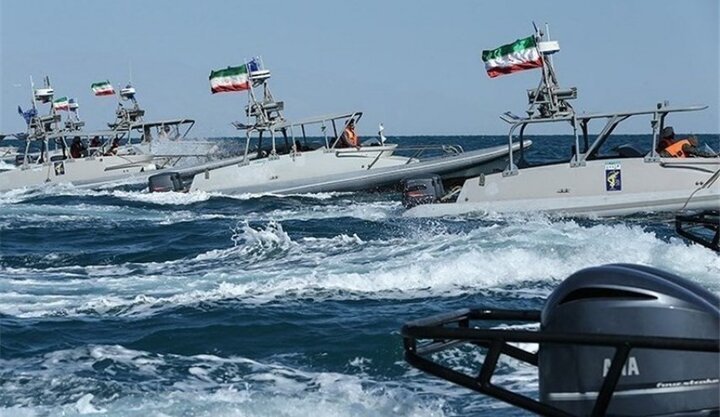
The once-open international thoroughfare, is now at the center of conflict because of the 28 February 2026 U.S.-Israeli war on the Islamic Republic of Iran. For Tehran, control of the natural chokepoint serves as an asymmetric strategy to counterbalance foreign military power. Iran has successfully relied on its geographical proximity, utilizing coastal missiles, fast-attack boats and strategic islands to assert control over the strait.
Today, the Strait of Hormuz, through which nearly a fifth of the world’s daily energy sources flow, remains the ultimate trump card in Iranian political geography. The passage grants Iran undeniable economic and strategic leverage.
From the divine association of Zoroastrian antiquity to the modern age of energy diplomacy, the Strait of Hormuz remains a defining feature of Iranian political geography. It continues to be the narrow gate through the geopolitical ambitions, economic lifeline and historic legacy of Iran intersecting with the wider world.
© 2026, M. Reza Behnam, Ph.D.
Dr. Behnam is a political scientist who specializes in comparative politics with a focus on West Asia.
[ad_2]
Source link
