
[ad_1]
The island of Tristan da Cunha (population 224) has no airport. Its seaport, which can only handle small boats, is a week’s journey from any other human settlement. So how do doctors get to an urgent medical case? It turns out, by parachuting in.
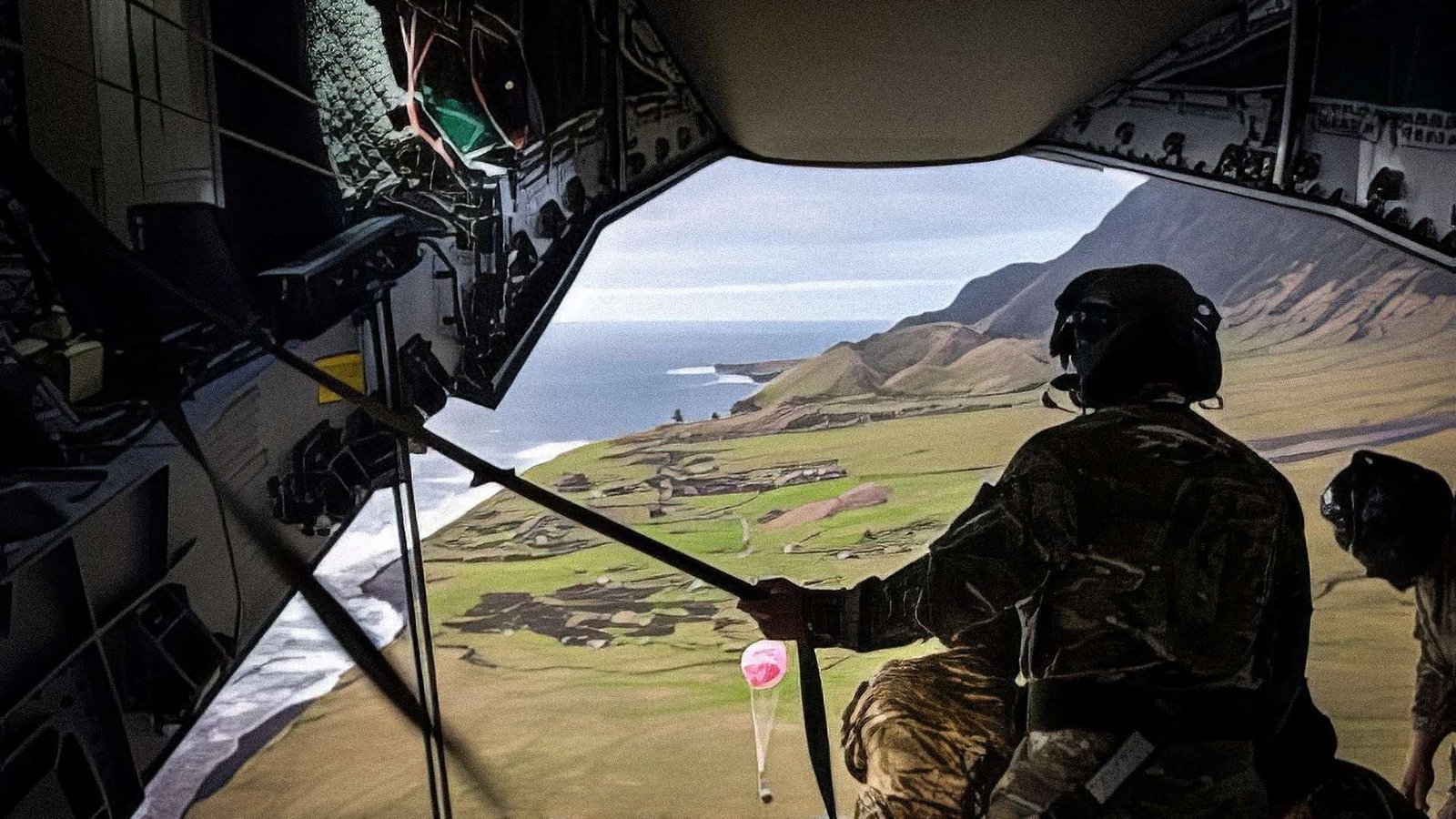
The British Army launched its first-ever airdrop of a medical team on Saturday in response to a hantavirus case on Tristan da Cunha. The plane loaded up with medical supplies, a doctor, a nurse, and a platoon of paratroopers from the 16 Air Assault Brigade at Royal Air Force Brize Norton, the military base outside Oxford. It refueled at Ascension Island before flying 2,000 miles south and dropping them on Tristan da Cunha, one of the few remaining British overseas territories.
The Tristanian victim had taken a trip on the MV Hondius, the infamous cruise ship at the center of an outbreak of hantavirus, a deadly and obscure disease that rarely spreads between humans. And weirdly enough, Tristan da Cunha is not the only remote British outpost affected by the hantavirus outbreak.
Pitcairn Island (population 35) is only accessible by a 32-hour boat cruise from Mangareva, itself a tiny island in French Polynesia. Somehow, an American woman exposed to hantavirus managed to get there. She had also been a passenger on the MV Hondius. Before authorities tracked her down, she flew to San Francisco, transited through Tahiti and Mangareva, and made the boat ride to Pitcairn.
Fortunately, the woman does not show any symptoms of hantavirus, according to French authorities, who said she will be forbidden from leaving Pitcairn until it is confirmed that she poses no danger. Keeping her in place shouldn’t be hard, since the boat between Mangareva and Pitcairn only makes the trip once a week.
There is a real irony in two remote islands—populated by people who like being left alone by the outside world—becoming some of the first places affected by a global pandemic. But both island societies also owe their existence to global trade.
Pitcairn Island was settled by mutineers on the HMS Bounty and their Polynesian wives. In 1789, the Bounty left Tahiti with a cargo of breadfruit, which the British Empire was hoping to cultivate in its Caribbean colonies. The crew members, who spent five idyllic months in Tahiti, decided they had enough of their harsh, paranoid captain. They left him behind on a small boat and took the Bounty to an uninhabited island.
After its rediscovery by British sailors several decades later, Pitcairn became a destination for Christian missionaries—and later tourists—looking for one of the furthest frontiers on Earth. That is likely why the woman from the Hondius bolted for Pitcairn after her Atlantic cruise. There was also a darker side to the island’s isolation. In 2004, a special tribunal found one-third of the male population guilty of sexual abuse.
Tristan da Cunha’s history is not quite as lawless. The island was first settled in 1810 by the eccentric American sailor Jonathan Lambert, who declared himself ruler of a new nation, the Islands of Refreshment. He made a living selling supplies and seal oil to passing ships before drowning two years later. In 1816, the British Empire annexed Tristan da Cunha, then inhabited by Lambert’s Italian-American follower Tomasso Corri, to prevent the island from being used as a U.S. or French military base.
Ships continued to stop at the island in search of fresh food, and the population grew from sailors who couldn’t or wouldn’t leave. Tristan da Cunha was a society without modern technology, written laws, or crime, according to the 2016 book Britain’s Treasure Islands by Stewart McPherson. Their currency was the potato, which they grew and traded with visiting sailors.
In 1961, a volcano forced the entire Tristanian population to flee onto small boats. They were fortunately picked up by a passing cruise ship and evacuated to England. It was a dramatic and unpleasant introduction to the modern world. Pestered by journalists, street vendors, Jehovah’s Witnesses, and criminals, the Tristanian refugees decided to go home after less than a year.
“I didn’t like the noise,” Tristanian returnee Harold Green later told McPherson. “It’s so quiet on Tristan that sometimes you can hear the grass growing.”
But the world also had a way of bringing uninvited trouble to Tristan da Cunha. In 1882, an American crew purposely wrecked their ship on the island in what McPherson calls a likely insurance scam. Rats from the ship destroyed Tristan da Cunha’s previously rat-free ecosystem. Accidental shipwrecks in 2006 and 2011 sparked fears of bringing similar infestations, McPherson writes.
Ironic, then, that one of the Tristanians themselves brought the hantavirus to Tristan da Cunha from a vacation abroad. Even the residents of the Island of Refreshment need refreshment elsewhere, sometimes.
[ad_2]
Source link
