
[ad_1]
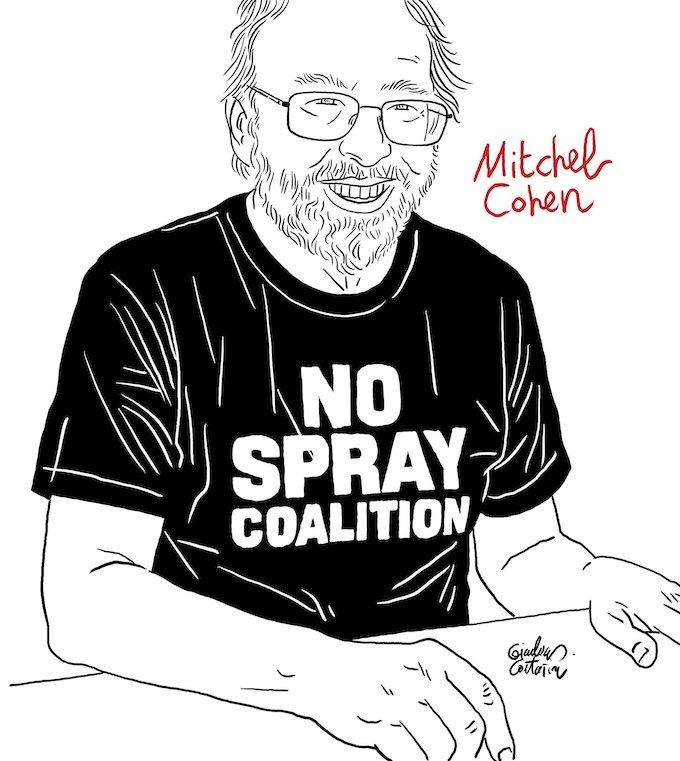
Mitchel Cohen and I knew each other for a quarter century, but we never met. That was my fault. With my usual blundering sense of direction, I got lost in Central Park and ended up on the wrong side of the park at the wrong end of Frederick Law Olmsted’s Bois de Manhattan from our planned rendezvous point. This was in 2000, before cellphones. Or at least a few years before I consented to having my every movement tracked by one. So we missed each other. Or rather, I missed him, because he was right where he was meant to be and I had probably walked right past him on my way to where I wasn’t meant to be. Mitchel Cohen never seemed to lack direction. He knew where he was going and he kept going that way right until the end, a few days ago.
I was in New York City that September week to inveigh against Al Gore. Our biography of the stiff neoliberal from Tennessee had just come out to reviews almost unanimous in their hostility. One reviewer wrote that the book was one of the most malicious and unflattering biographies ever written of an American politician. We took that as high praise. And so did Mitchel. He had that kind of mind, a little perverse in other words. I had a backpack of copies that I was going to unload on him. Mitchel was a Green Party activist and he was going to pass along copies of our incendiary tome to other Greens and Naderites who would put its disparaging revelations about the Ozone Man to effective political use. Three months later, after Gore managed to lose to Bush, Mitchel wrote me: “You and Alex’s book was probably the decisive factor. Way to go, guys.” He had a sense of humor as well as direction.
I’ve always thought the dysfunction of the Green Party was one of its more admirable attributes. I don’t think Mitchel felt the same way. He was a serious and committed Green Party activist, and that was one of his admirable qualities. He wasn’t naive, but he also hadn’t surrendered to my level of political cynicism, trending toward nihilism. Mitchel genuinely thought that the world could get better. That it had to get better, not out of some utopian vision but from sheer necessity. We had to stop poisoning ourselves. No, that’s not quite right. He believed that we had to stop Them from poisoning Us.
I got to know Mitchel courtesy of Monsanto. I was investigating Monsanto’s political clout, how they seemed to infiltrate every administration, regardless of party affiliation, with former employees who continued to do their “former” company’s bidding from inside the Agriculture Department, Interior Department and EPA. And often from within the West Wing of the White House itself.
Someone told me nobody knew Monsanto like Mitchel Cohen with the No Spray Coalition. I called him up. We talked. Well, Mitchel talked and I scribbled notes on legal pads. I called again. Took more notes. I kept calling, Mitchel kept answering and giving me an activist’s very informed view of the political machinations of one the world’s most malevolent corporations, a corporation that Mitchel and his colleagues beat the hell out of for the next 20 years, eventually forcing the embattled, litigation-hobbled enterprise to be sold to Bayer, which swiftly dropped its sullied name, if not all of its toxic products, like Round-Up.
Eventually, I told Mitchel that perhaps I should stop taking dictation and he should do the writing himself and send it to me and we’d publish it on CounterPunch, which had just recently debuted on that new weird thing Cockburn and I were both still suspicious of called the Web. And Mitchel did. He wrote and he wrote and kept writing until shortly before he died. A death, he told me in frank, unsentimental terms a few weeks ago, he knew was imminent. (I was much more emotional about the grim news than he was.) He was like Cockburn in that respect. He kept thinking and writing even when he felt like shit, even when he knew time was running short and maybe there were other things he could do in his final days.
I don’t know if that singularity of purpose is desirable for everyone. But it’s who Alexander Cockburn was and it’s who Mitchel Cohen was. He was following his unwavering sense of direction, which compelled him to continue speaking out for life, for living things, and for a livable world, even as his own life was coming to a close. I can’t imagine a more honorable quality in a person.
[ad_2]
Source link
