
[ad_1]
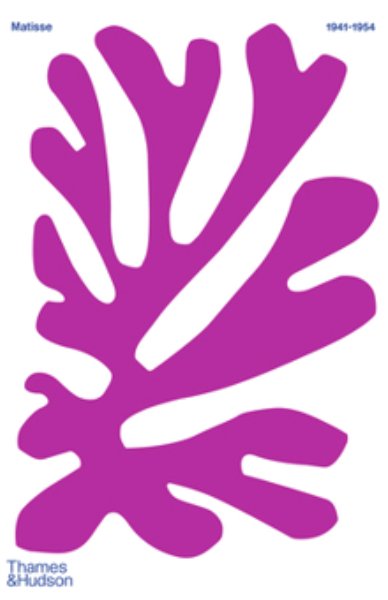
Color Unbound: Matisse 1941-1954
Matisse. 1941-1954
Grand Palais, Paris
March 24 – July 26, 2026
Catalogue
(Thames & Hudson, 2026)
Edited by Claudine Grammont
Acquavella Galleries, New York,
April 9- May 22, 2026
This year Marcel Duchamp (1887- 1968) and Henri Matisse (1869-1954), renowned modernists with very diverse artistic perspectives, are having major retrospectives. When they died, they were immense living influences upon contemporary artists. Duchamp was a key precursor for both Jasper Johns and Robert Rauschenberg, as well— of course— as for very many other living artists. And Matisse was said to make possible the abstractions of Morris Louis and the color field painters. But now, in a contemporary art world heavily concerned with gender and race, these two men have become more distant figures. Very little art in the present Whitney Biennale or the survey show of the Inaugural exhibition of the New Museum displays a debt to Duchamp or Matisse. And perhaps through ignorance, I don’t know of any artists who significantly use them as a model. Duchamp and Matisse were very influential, but now the art world has moved on. And so, the era when they had retrospectives at MoMA, Duchamp in 1973, Matisse in 1978, feels surprisingly distant. 
One advantage of being a long-lived art writer is that you inevitably gain historical perspective. And since we now have commentaries by a new generation of art writers, this is the right time to look at Matisse and Duchamp’s achievement again. In a forthcoming review for Athenaeum Review, I discuss Duchamp’s current MoMA retrospective. And also here, with reference to the great just published catalogue for a forthcoming French show of Matisse’s late works, and to an exquisite New York gallery show focused on Matisse’s paintings, I consider his legacy.
As everyone knows, we have become suspicious of beauty, harmony and wholeness as artistic goals. And so, although Hilary Spurling’s massive two-volume biography has revealed the struggles of Matisse, both early on and late in life, to achieve harmony, still his sensibility— by which I mean his essential aesthetic theorizing— remains distant. In 1941, when he was 71, Matisse nearly died on the operating table. And after that, working through constant pain and severe physical imitations, at a time of French political disasters, which touched his own family, he lived 13 more years, producing a magnificent body of works. There have been discussions recently about old age styles of various artists. What is special, perhaps unique about Matisse he that he physically changed his physical way of art making, in ways that are fully traced in “Color Unbound.” Up until then, he had basically been an easel painter. (He had, it’s true, also done a large mural for Albert Barnes.) Now, however, he cut papers colored by assistants, and had them pinned onto his compositions, which were glued onto supports. The subjects of his late works were very various— large decorative assemblages, book illustrations and the sacred works for the chapter at Vence. Many modernists have worked using paper for collages. Matisse, who spoke of this process as cutting into color, had found a highly distinctive technique. He was always obsessed with artistic continuity.. And so it is unsurprising that he used this very original technique to sustain his essential aesthetic. Born in the time of Impressionism, he extended his very traditional ways of thinking into the era of Abstract Expressionism.
The essays in the Thames & Hudson exhibition catalogue discuss the implications of this novel form of art making, which suited Matisse’s physical limitations in old age. What to me is most surprising is that these late works extend his basic very traditional way of working. His technique, as Matisse explained, involves a triangular relationship: model, artist and image of that model. In the 1920s and 30s, Matisse did many variations on this theme, always as he indicated, responding to her sensual presence. You see a number of these works in the Acquavella show. Once in conversation Sean Scully contrasted Matisse’s use of this triangular way of working to his own concerns as an abstract painter, who found within himself a sense of art history. (This discussion was before Scully exhibited his recent figurative paintings.) Working with cut papers, which deconstructed this traditional way of working, tended to push Matisse towards decorative abstraction. They inspired a radical transformation, that prior three-part relationship, model/artist/image replaced by a two-way relationship between the artist and his work. What to me is most surprising is that his essential sensibility survived this vast change of media. Without necessarily looking at a model, he created his cut-outs, in repetitions which would have been deadly in anyone else’s hands, but for Matisse are pure grace. And thanks to the newest printing techniques, Matisse’s late works look glorious. Color Unbound deserves a prize as the most beautiful art book of the year.
Notes:
My “Poussin’s Cartesian Meditations: Self and Other in the Self-Portraits of Poussin and Matisse,” Source , XV, 3 (Spring 1996): 28-35 and “The Art of Making Spectacles: A Short History of the Development of Painting from Matisse and Pollock to Manet,” Seeing and Beyond: Essays on Eighteenth- to Twenty-First-Century Art in Honor of Kermit S. Champa, Eds. Deborah J. Johnson and David Ogawa (New York: Peter Lang, 2005), 7-19.
[ad_2]
Source link
