
[ad_1]
With gasoline prices a hot issue for voters as the midterm elections approach, President Donald Trump said he is making progress.
A reporter asked Trump on May 7 about average gasoline prices recently rising past $4.50 a gallon nationally.
Trump replied, “Gas prices have come down today. Have you looked? They’ve come down very substantially today.”
That’s inaccurate.
According to the American Automobile Association, the national average price for a gallon of gasoline rose each day for four days preceding Trump’s remark. The day after he spoke, May 8, prices dropped by about a penny per gallon.
Crude oil — which is refined into gasoline — had a price drop in the days before Trump’s remark. But gasoline prices did not follow, a pattern that experts say is typical because of short-term volatility in crude oil prices.
The White House did not immediately respond to an inquiry for this article.
Recent changes in gasoline prices
From May 4 to May 7 — the day of Trump’s comment — the national average price as reported by AAA rose each day leading up to his statement:
-
$4.457 on May 4
-
$4.483 on May 5
-
$4.536 on May 6
-
$4.558 on May 7.
(There is price variation across states and regions, and from gas station to gas station; literally, your mileage may vary.)
The day after Trump’s remark, the average gasoline price reported by AAA dropped to $4.546. Even if that change had happened before he spoke, it would not have qualified as prices dropping “very substantially.” The 1.2 cent drop amounted to a decline of two-tenths of 1%.
In the days leading up to Trump’s comment, crude oil, the commodity that is refined into gasoline, declined in price.
Brent crude, the standard price metric for international oil markets, fell from a peak of about $114 a barrel on May 4 to roughly $103 around the time Trump spoke on May 7, a drop of about 10%. West Texas Intermediate, a price measure for U.S.-produced oil, fell from almost $84 a barrel on May 4 to around $79 when Trump spoke, roughly a 6% decline.
But the price of gasoline — not the price of crude oil — is what consumers encounter at gas stations. And a crude oil price decline — if it were sustained over more than a few days — can take weeks or even months to show up at the pump, experts say.
In the short to medium term, the pattern for gasoline prices is known as “up like a rocket, down like a feather” — rapid rises, but slower declines.
Part of this stems from gas station owners’ caution; they fear a sudden price spike cutting into their usually narrow profit margins. Motorists also tend to shop around less when prices are falling, reducing competitive pressures among gas stations.
The bigger picture on gasoline prices
Gasoline prices are unusually high, spurred by the war Trump launched with Israel against Iran, which led to the closure of the Strait of Hormuz. Before Iran closed the strait, about one-fifth of the world’s oil flowed through it, and the stalled tanker traffic has hampered oil supplies, increasing prices.
The price of gasoline May 8 — about $4.55 — is the ninth-highest weekly price in U.S. history since 1990. The only time period when prices were higher was eight weeks from May through July 2022 following Russia’s invasion of Ukraine, which prompted western sanctions on Russian oil.
The share of income Americans are devoting to gasoline today is high but — unlike the price they see at the pump — it isn’t close to the highest ever.
At today’s prices, 10 gallons of gasoline accounts for almost the same share of disposable household income as it did in 2022 — around 3.6%. And if — or when — the average gasoline price passes $4.80 per gallon this year, it would match that 2022 level.
However, 10 gallons of gasoline cost more as a percentage of disposable income in nine of the 10 years between 2005 and 2014.
How high could prices go?
Experts cautioned that even after the strait is opened — which is uncertain — gasoline prices will likely remain high for months.
So far, “we’ve lost 65 days” of oil shipments because of the closure, and it will take months to make that up, said Patrick De Haan, the head of petroleum analysis for the gasoline price tracker GasBuddy.
Iranian attacks on neighbors’ oil infrastructure will add to that delay by forcing key oil infrastructure to idle or rebuild. It could take “months to years to get export capacity up to where it was” before the war, said Hugh Daigle, University of Texas-Austin petroleum and geosystems engineering professor.
Skip York, fellow in energy and global oil at Rice University’s Center for Energy Studies, said that because wholesale prices have been increasing faster than retail prices over the last eight weeks, additional price increases could continue working their way through the system.
“I wouldn’t rule out gasoline prices breaching $5 a gallon this summer depending on what happens to crude oil prices, what the U.S. driving season looks like and whether there are any major unplanned outages at U.S. refineries,” York said.
Our ruling
Trump said gasoline prices have “come down very substantially today.”
From May 4 to May 7, gasoline prices did not drop. Crude oil prices decreased during that time period, but day-to-day variations in crude oil prices generally do not show up immediately in prices at the pump.
By historical standards, U.S. gasoline prices are unusually high. The only time they were higher was for eight weeks in 2022, after Russia’s invasion of Ukraine.
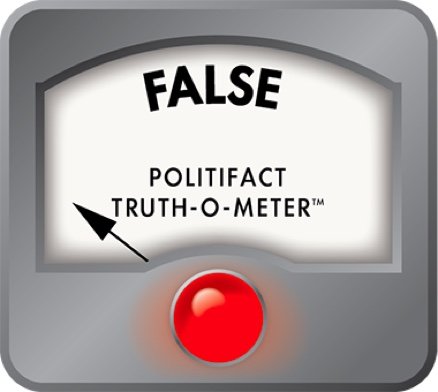
We rate the statement False.
[ad_2]
Source link
